
(Business Lounge – Travel) My friend and business associate, Andrzej Rutkowski, visited Leiden in the Netherlands and later shared his impressions and photographs with me. Through his account, I came to see Leiden as much more than a pretty Dutch city. It is a place where canals and historic townhouses sit alongside a long tradition of scholarship, scientific discovery, and art. His photographs gave me a window into the places he encountered, while his story brought those images together into a sense of the city.
Andrzej’s description was of a city best explored with time to look around. Leiden’s charm is not concentrated in one landmark. It appears in the details: a canal bending between old buildings, a quiet path beneath trees, a museum filled with ingenious instruments, or the traces of a cultural history that continues to shape the city today.
A City of Canals and Old Townhouses
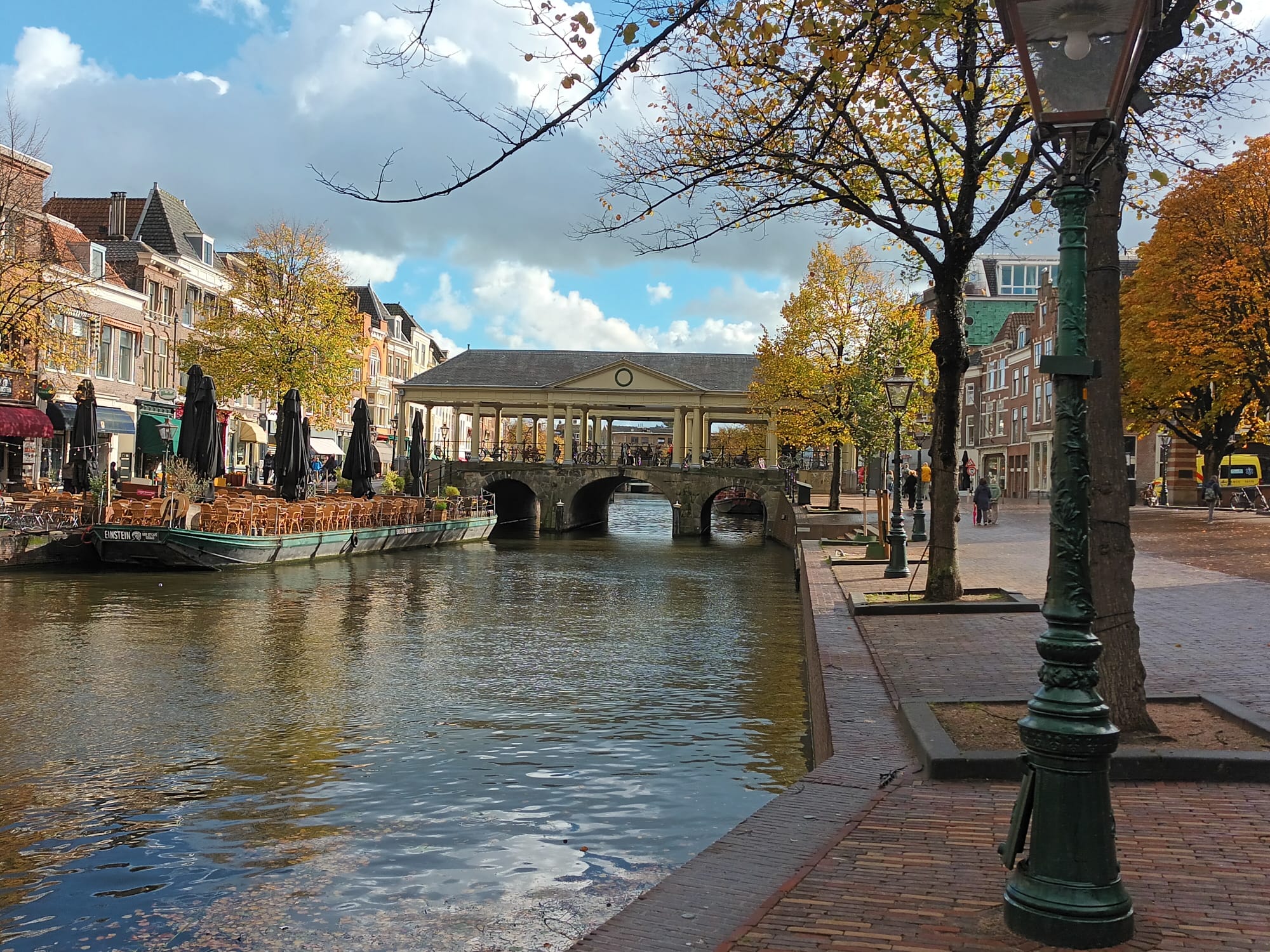
The photographs Andrzej sent showed Leiden’s close relationship with water. Canals pass through the historic centre, reflecting brick façades, bridges, boats, and the changing Dutch sky. Along the banks, everyday life unfolds beside buildings that carry the marks of earlier centuries. The result is a cityscape that feels both historic and lived-in, where the water is not merely scenery but part of the rhythm of the place.
One image showed a canal under a cloudy sky, with moored boats and rows of buildings lining the water. Another offered a brighter view, with terraces and waterfront activity. Together, the scenes suggest how much the mood of Leiden can change with the weather and light. Rather than presenting a single postcard view, the photographs capture a city with different atmospheres from one street and moment to the next.
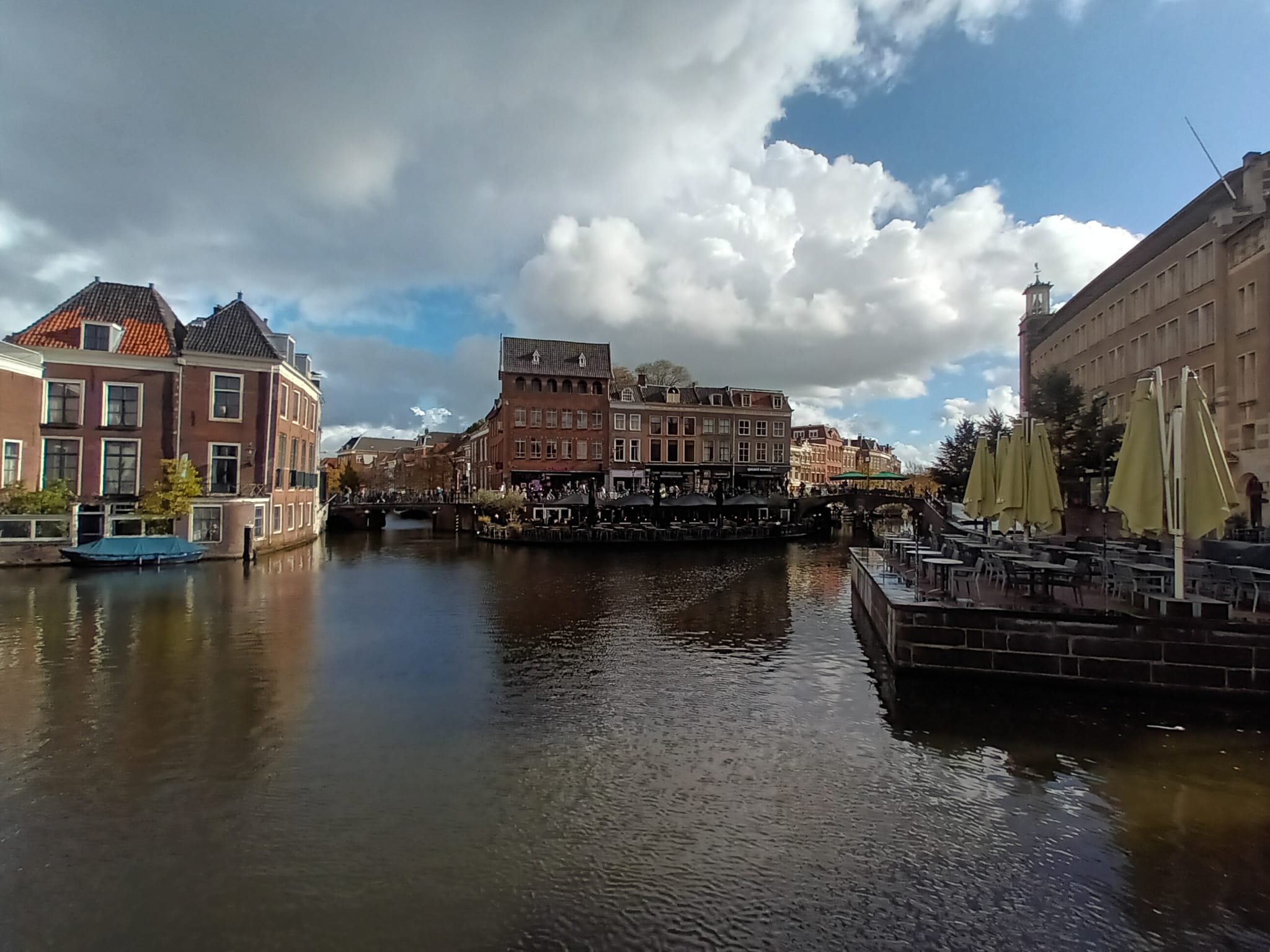
A canal-side view showing Leiden’s buildings and waterside terraces. Photo by Andrzej Rutkowski
A Museum Where Science Becomes Visible
One of the places Andrzej visited was Rijksmuseum Boerhaave, the Dutch museum devoted to the history of science and medicine. His photographs included remarkable scientific instruments whose complex shapes and carefully made components reveal the skill required to study the natural world in earlier centuries. These objects are more than museum pieces: they are evidence of the ingenuity, patience, and curiosity that helped scientific knowledge develop.
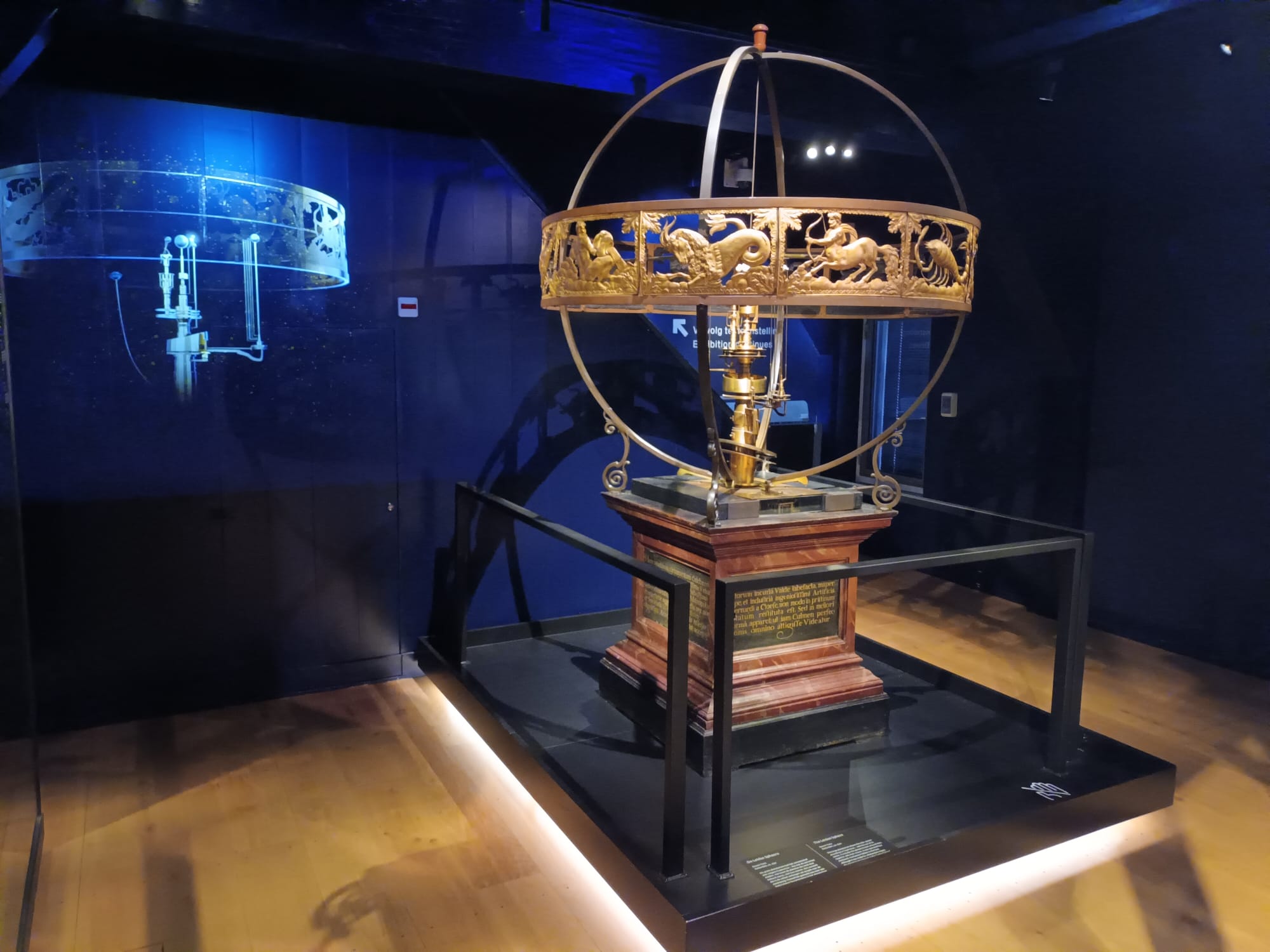
An elaborate historical instrument photographed at Rijksmuseum Boerhaave. Photo by Andrzej Rutkowski
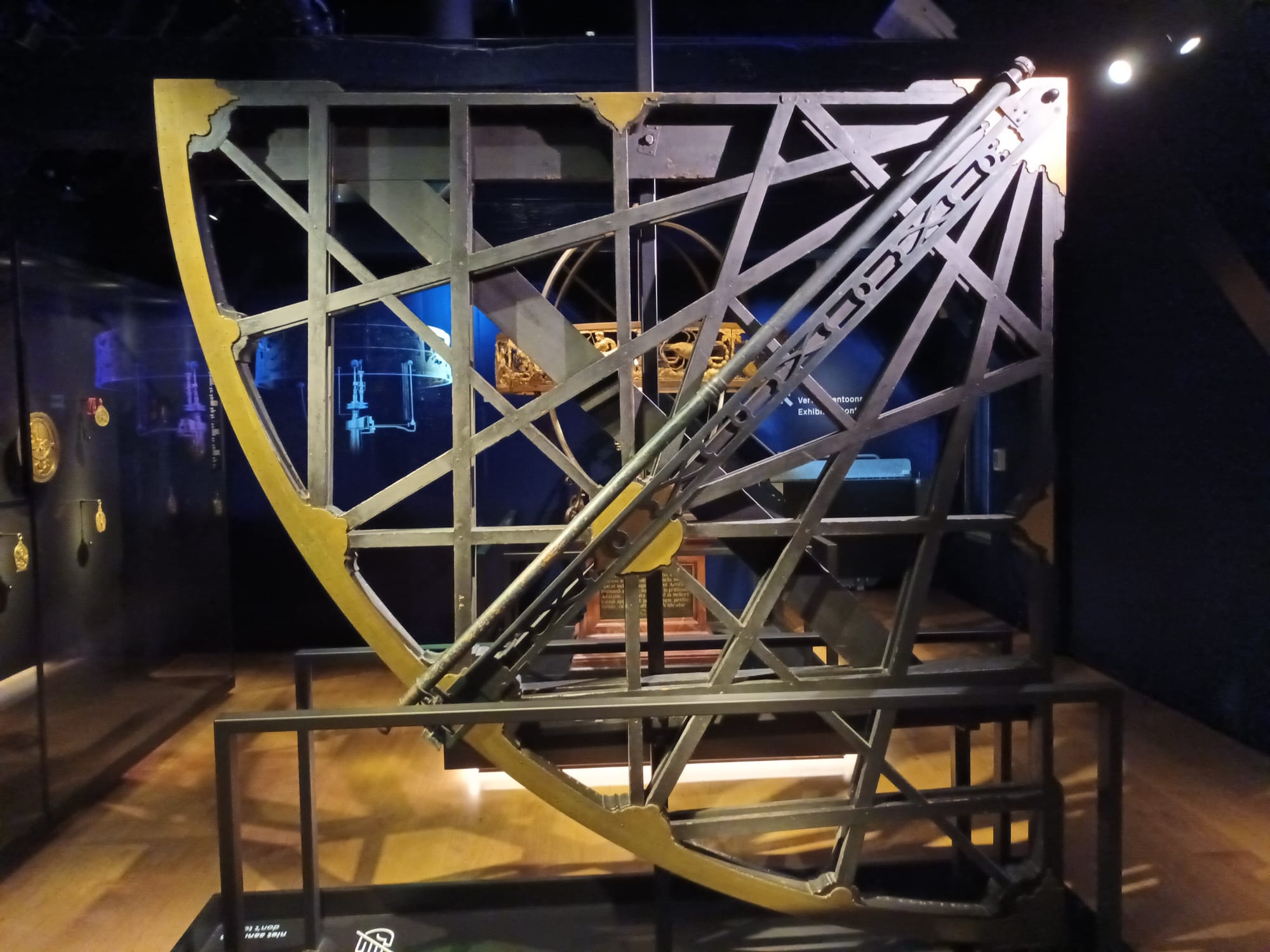
A large scientific apparatus displays the intricate engineering of an earlier era. Photo by Andrzej Rutkowski
The instruments have a striking visual presence. Metal rings, calibrated parts, and carefully arranged frameworks can look almost sculptural, yet each was created for a practical purpose: to observe, measure, or investigate. Seeing them helps bridge the distance between modern technology and the people who first devised tools to understand the world around them.
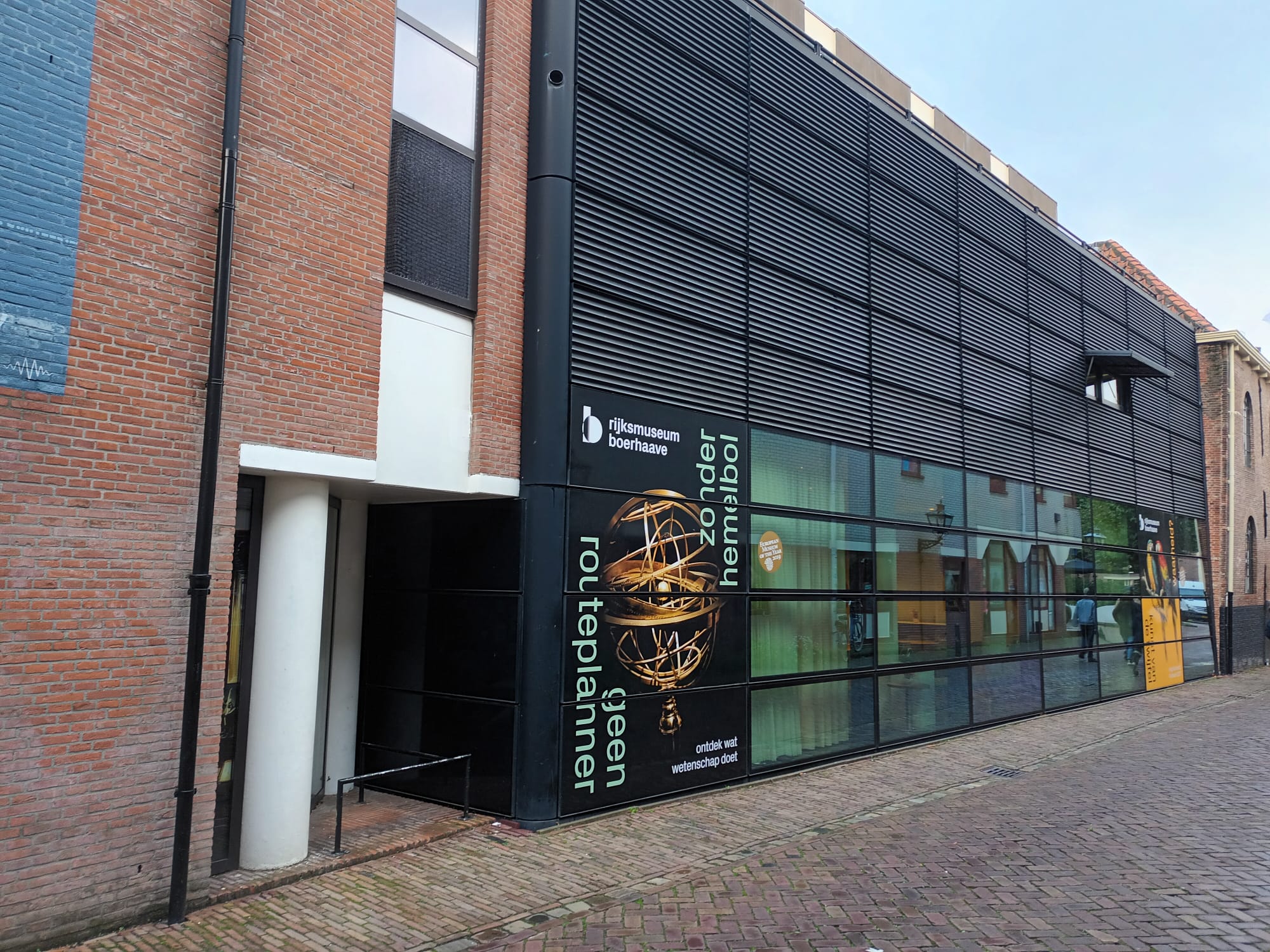
The exterior of Rijksmuseum Boerhaave, set within Leiden’s historic urban environment.Photo by Andrzej Rutkowski
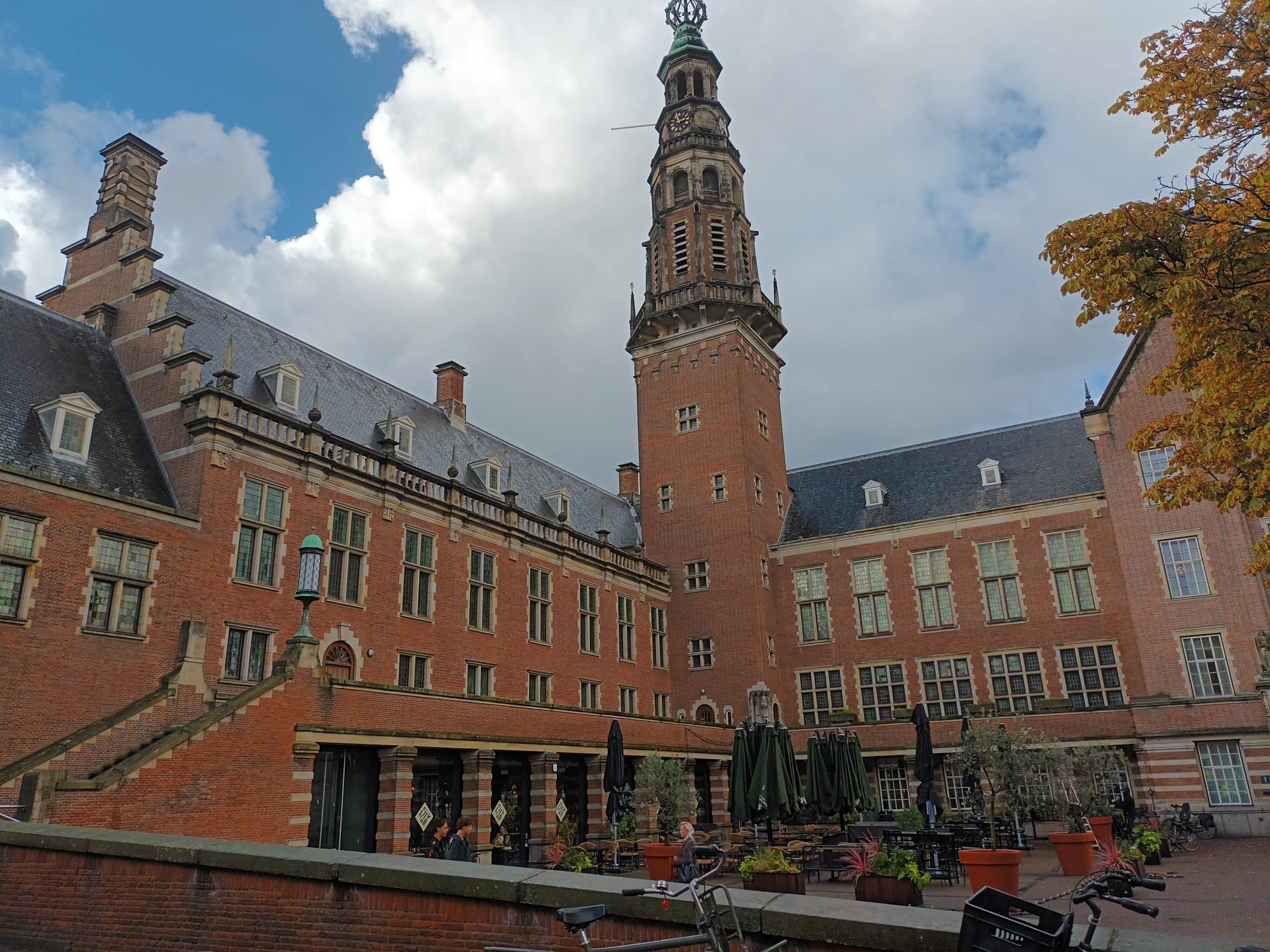
The museum also reflects Leiden’s broader intellectual identity. The city is home to Leiden University, founded in 1575, and has long been associated with learning and research. Its historic botanical garden, Hortus Botanicus Leiden, dates to 1590 and connects the study of plants with this academic tradition. These places show how science and education have become part of Leiden’s character across generations.
Poetry on the Walls, Rembrandt in the City’s Story
Leiden’s cultural life extends beyond museums and university buildings. Poems displayed on walls around the city bring literature into public space, allowing passers-by to encounter writing as part of an ordinary walk. The collection includes work by poets from different countries and traditions, including Nobel Prize-winning writers. The idea is simple but memorable: a street can become a place of reading, and a townhouse wall can offer an unexpected moment of reflection.
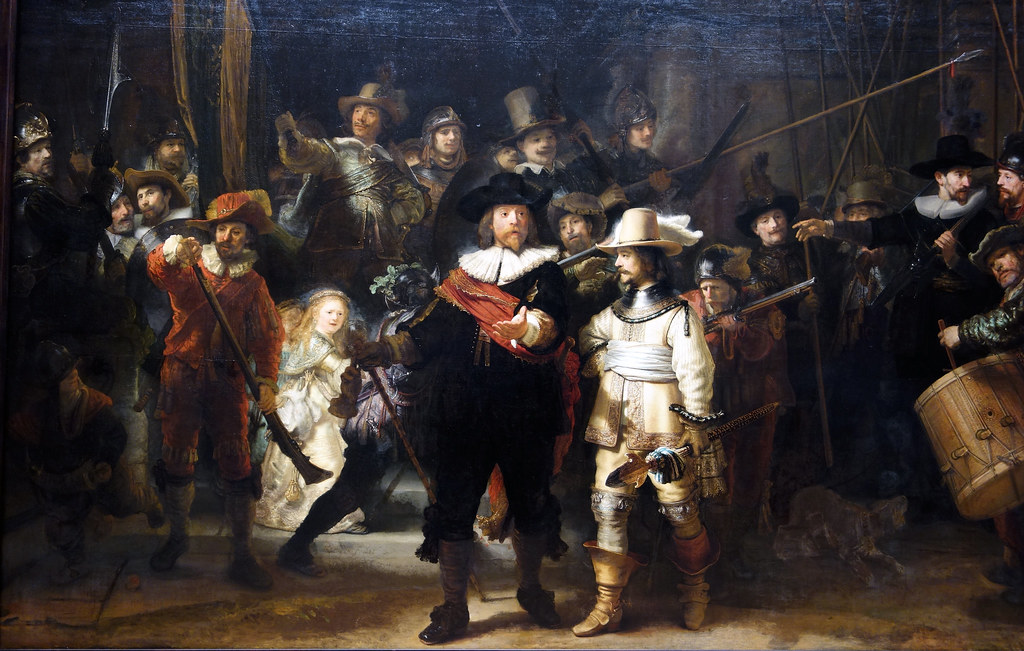
The city is also known as the birthplace of Rembrandt van Rijn, who was born in Leiden in 1606. Although his later career became closely associated with Amsterdam, his beginnings belong to Leiden. That connection adds another layer to the city’s identity, linking its streets with one of the great artists of the Dutch Golden Age. In Leiden, art, literature, science, and academic life are not isolated attractions; together, they help tell the story of a city shaped by ideas.
Green Corners and a Dutch Windmill
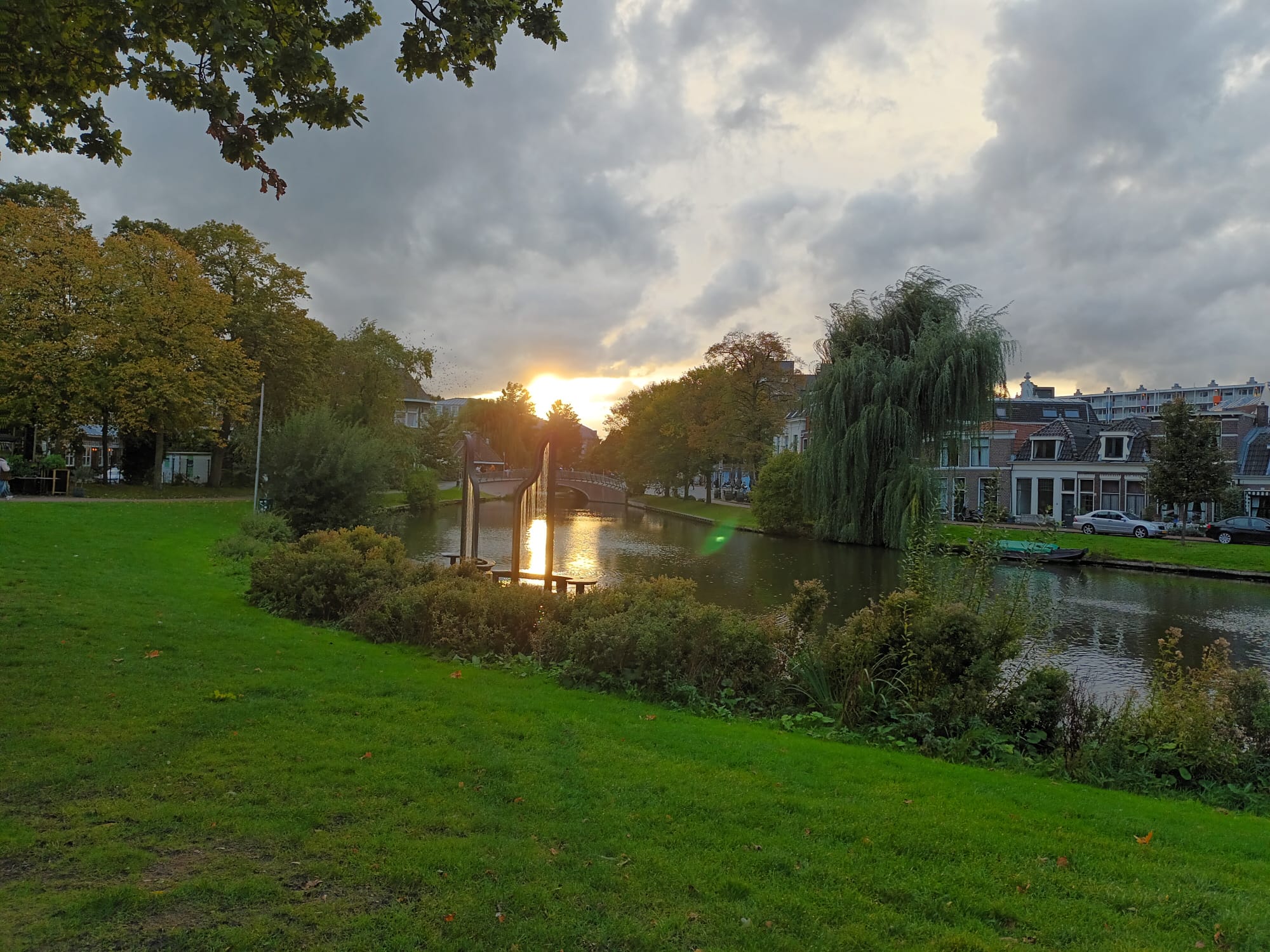
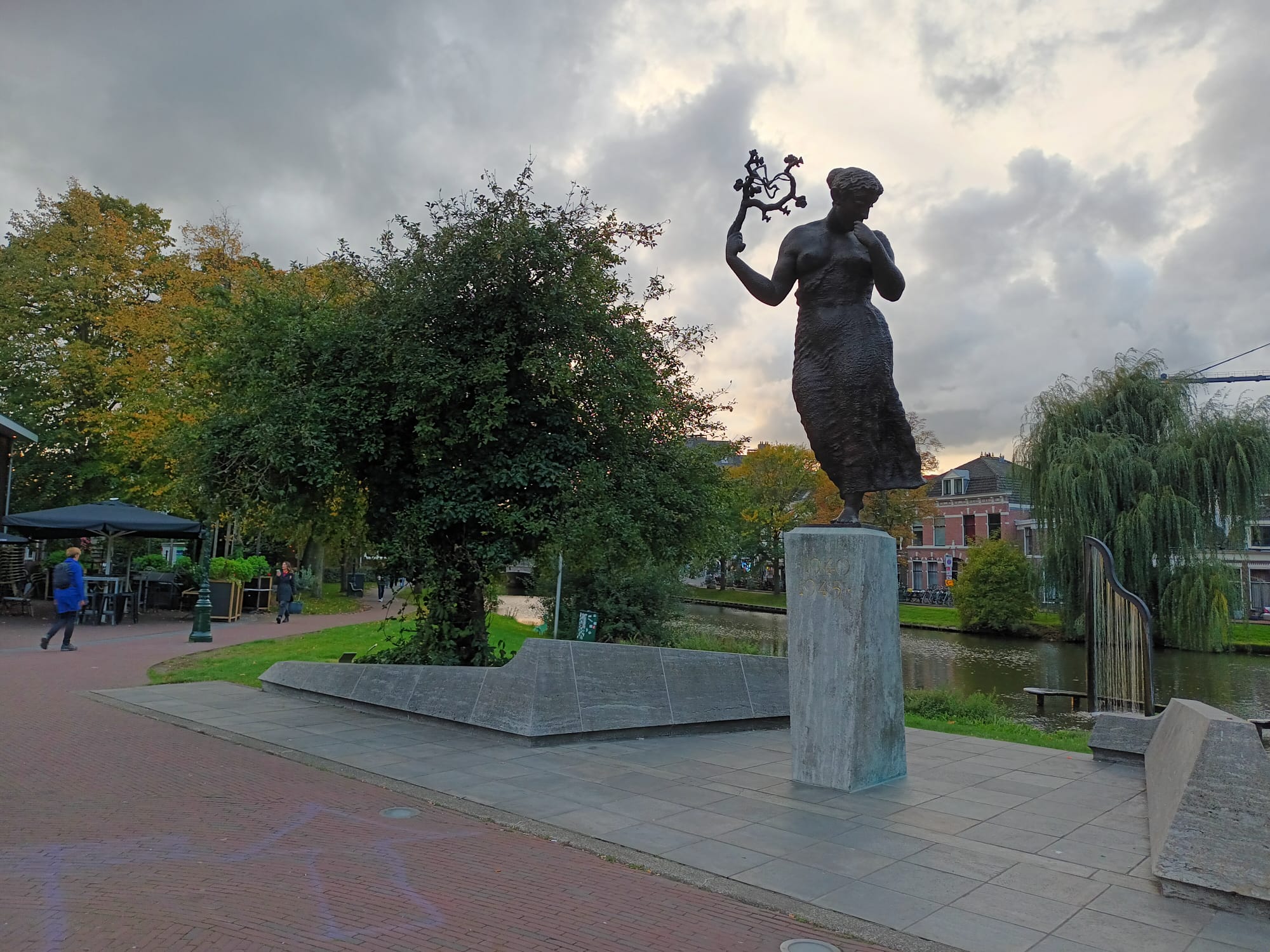
Andrzej’s photographs also included quieter public spaces. One showed a green area beside the water in the warm light of evening; another featured a sculpture framed by trees and a path. These scenes reveal a gentler side of Leiden, where visitors can step away from the busier streets and enjoy a pause among greenery and water.
A peaceful green space beside the water in the evening light.Photo by Andrzej Rutkowski
A sculpture adds an artistic detail to Leiden’s public landscape. Photo by Andrzej Rutkowski
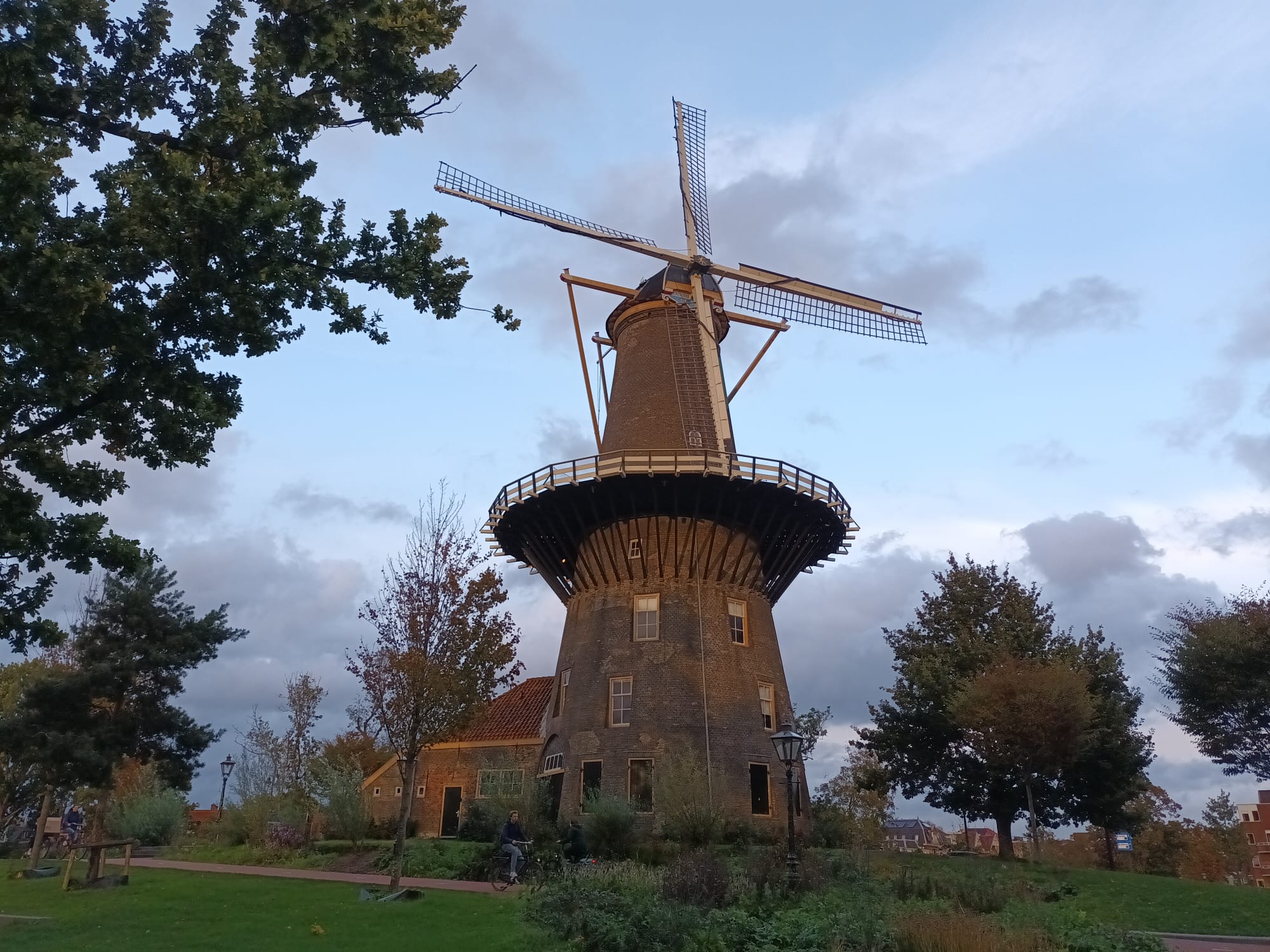
Another photograph captured a traditional windmill rising above the trees. Windmills are an enduring symbol of the Netherlands, but their history is practical as well as picturesque. They played important roles in milling and water management, reflecting the ingenuity required to live with the country’s low-lying landscape. The windmill in Andrzej’s photograph connects Leiden’s urban scenery with the wider Dutch relationship between people, engineering, and water.
A traditional windmill stands above the surrounding trees. Photo by Andrzej Rutkowski
A final view of Leiden’s waterside setting.Photo by Andrzej Rutkowski
The Leiden Andrzej Shared with Me
What I took from Andrzej Rutkowski’s story was not simply a list of places to visit, but a picture of how Leiden brings different worlds together. Its canals and townhouses offer visual beauty; its museum collections reveal the history of scientific curiosity; its university and botanical garden speak to centuries of learning; and its poetry and Rembrandt connection give the city a distinctive artistic presence.
I did not experience this particular visit myself. My impression of Leiden comes from Andrzej’s account and the photographs he shared with me. Yet those images make it easy to understand why the city stayed with him: each one shows a different part of a place where history remains visible in everyday life. Leiden seems to reward visitors who take their time, look closely, and allow a city to tell its story through small discoveries as much as famous names.
Through Andrzej’s visit, Leiden became for me a city of contrasts held in balance: science and art, historic buildings and living streets, water and greenery, grand cultural traditions and quiet daily moments. His photographs offered a glimpse of the city; his story gave those images meaning.