
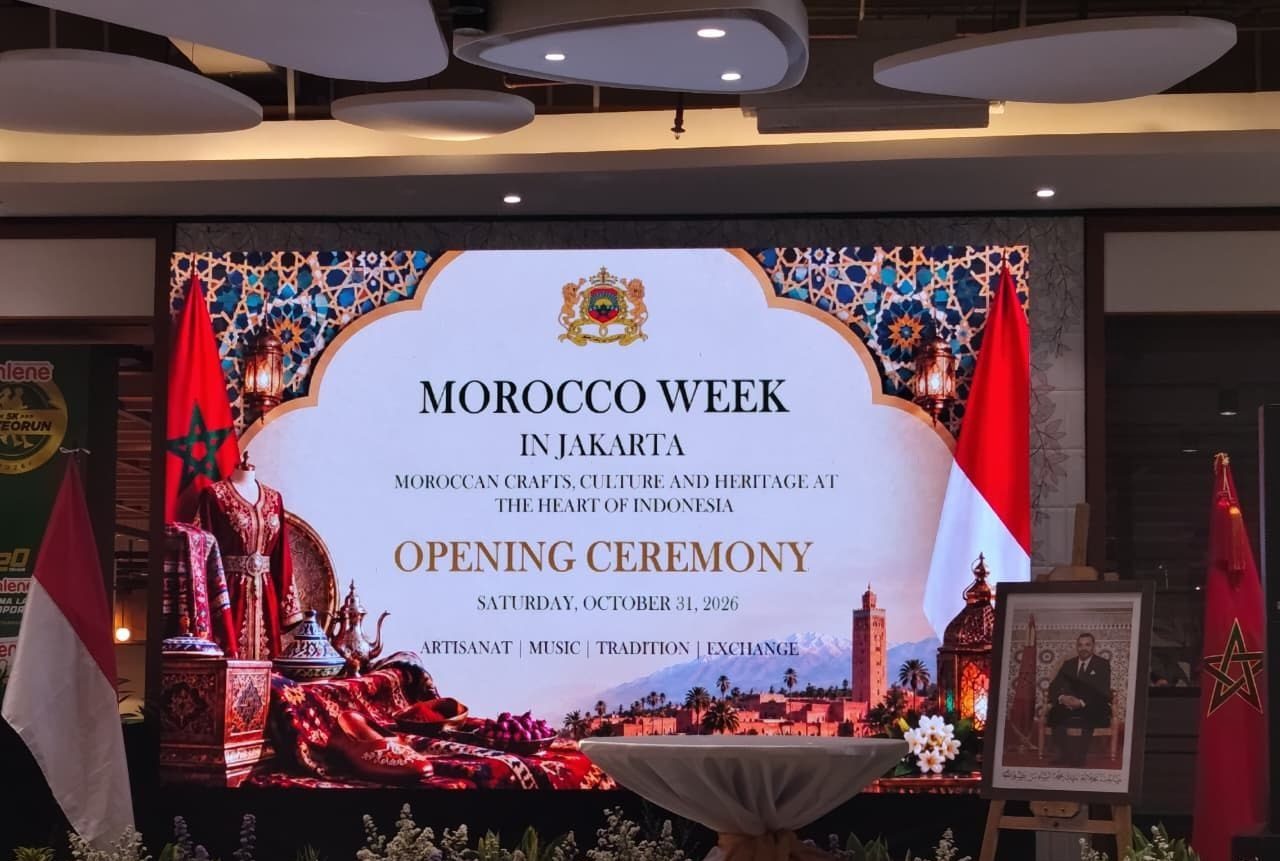
From intricate ceramics and traditional weaving to carpets, caftans, and the ritual of Moroccan tea, the exhibition offers visitors a closer look at the skills, people, and stories behind the Kingdom’s handicrafts.
(Part 2 of a two-part series on The Moroccan Handicraft Week in Indonesia)
(Businesslounge Journal-Event) While the first part of this article explored the cultural connections between Morocco and Indonesia and the broader objectives of The Moroccan Handicraft Week in Indonesia, the exhibition itself offered another perspective: an opportunity to discover Moroccan heritage through the objects, materials, and skills presented by its artisans.
During my visit on the opening day, Saturday, 31 October 2026, at Senayan Park, Jakarta, I found that the exhibition was more than a display of finished products. Its approximately 200-square-metre pavilion offered different glimpses of Moroccan craftsmanship. Visitors could see not only the products but also, in several sections, the tools, techniques, and people behind their creation.
Mr. Jalal Charaf, Promotion and Business Development for International Market at Maison de l’Artisan, guided me through several displays, explaining the products, materials, techniques, and artisans represented in the exhibition. I also referred to the exhibition booklet, which provided further information about the collection and its makers. The explanations and details in the booklet were consistent, helping me gain a better understanding of the background of the works on display.
Discovering Moroccan Design and Creativity
As I moved through the first section, I began to notice how differently Moroccan craftsmanship could be expressed. Some objects retained the character of traditional artisanal work, while others reflected a more contemporary approach.
One example was the Zaha Teapot, designed by Hicham Lahlou and made of nickel-plated brass. Its design brought together a contemporary aesthetic and references to Morocco’s long-standing tradition of metal craftsmanship.
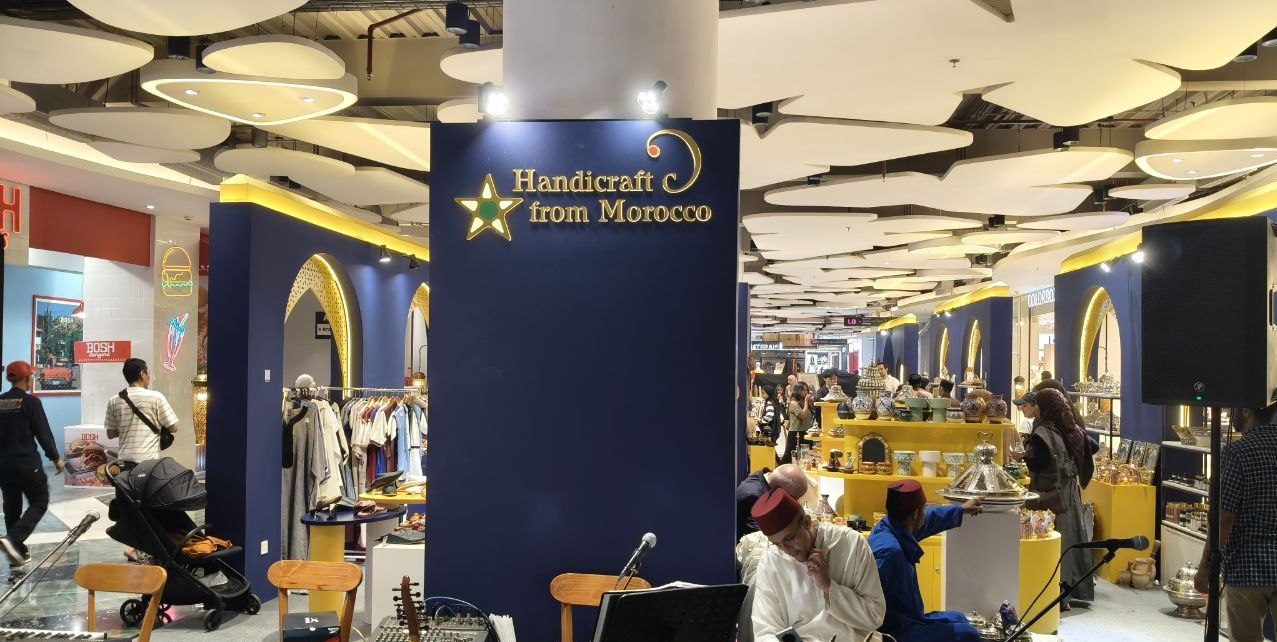
Ceramic works by Sania, including a piece titled Asilah, offered another expression of this craft. Made from white clay and finished with glaze and natural mineral oxides, the ceramics demonstrated how materials and surface treatments contribute to the character of an object.
The exhibition also featured accessories by designer Amina Agueznay, incorporating materials and techniques such as woven wool bracelets, dyed natural spun wool, silver, and crochet. These creations showed how traditional materials and skills can be explored through different forms of design.
Another notable display was the collection of hand-painted ceramic tiles by Said Benadiba. Their colourful surfaces and carefully arranged geometric patterns reflected a distinctive visual tradition. Beyond their decorative appeal, the tiles are also suitable for practical applications, including wall decoration, tabletops, and flooring. Mr. Jalal explained these different uses, providing a better understanding of how Moroccan ceramic craftsmanship can be incorporated into both decorative and functional spaces.
What I found interesting was the variety of approaches represented. The objects were not limited to one style or period. Instead, they suggested how Moroccan craftsmanship continues to evolve, finding expression through both established techniques and contemporary design.
The Hands and Stories Behind the Craft
One of the most engaging parts of the exhibition was the opportunity to see traditional craftsmanship in action and, more importantly, to meet the artisans behind the work. The organisers had brought not only finished products but also the looms and tools used in their production, allowing visitors to observe several traditional techniques.
One of my most memorable encounters was with the artisan demonstrating traditional Moroccan weaving. He was an older craftsman, whose years of experience were reflected in the confidence and ease with which he handled the loom. Despite his age, he remained energetic, polite, and enthusiastic about sharing his knowledge.
He explained the weaving process to me in Moroccan Arabic, while Mr. Jalal kindly translated his explanations. Through this exchange, I learned more about how the threads were carefully worked into finished textiles. It was a simple but meaningful interaction: the artisan shared his knowledge in his own language, and Mr. Jalal helped bridge the language gap, allowing me to understand not only the process but also the dedication behind the craft.
Watching him work gave a different perspective on the large woven cloth displayed at the exhibition. Its strength and beauty were not simply the result of the materials used, but also of years of practice, patience, and accumulated skill.
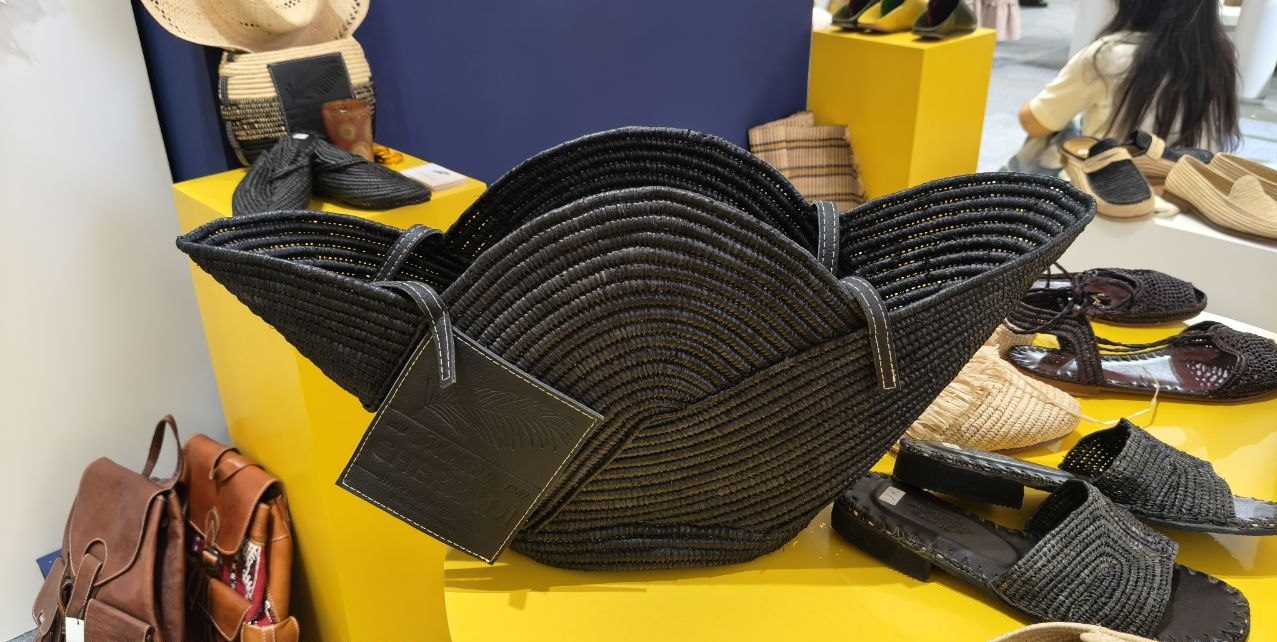
Another demonstration introduced the use of raffia, a natural plant material commonly used to make items such as sandals, shoes, and bags. I also had the opportunity to meet the female artisan who demonstrated how raffia could be woven into footwear. She explained the process and mentioned that the resulting products were relatively affordable. This was an interesting reminder that traditional craftsmanship does not necessarily have to be associated with expensive or purely decorative objects. It can also produce practical items for everyday use.
I was equally interested in the wood-painting demonstration. Meeting the artisan gave me an opportunity to learn a little about his work and the tools he used. He showed me several paintbrushes of different sizes, all made from donkey hair. Interestingly, he explained that these brushes had already been in use for around ten years. It was a small but fascinating discovery, revealing how traditional craftsmanship depends not only on specialised techniques but also on practical knowledge of materials and tools that can serve artisans for many years.
These encounters gave the demonstrations a more personal meaning. Rather than simply observing techniques, I could interact with the people who practise them and hear, through their explanations, something about the knowledge and experience behind their work. Each artisan had a different craft, but all shared a willingness to demonstrate and explain what they knew.
Carpets, Caftans, and Everyday Objects
Moving further into the exhibition, I encountered another aspect of Moroccan heritage through its carpets, traditional clothing, and household objects.
The Moroccan caftan was particularly striking. More than a traditional garment, it represents a rich heritage of dressmaking and detailed craftsmanship. Its distinctive character can be seen in the brocade, silk-thread embroidery, and traditional [aakads] —the decorative fastenings used in caftans.
One of the pieces on display dated back to 1950. Looking closely at its intricate details, I could appreciate the refinement of the workmanship and the expertise associated with the [maalem], or master artisan. The garment offered a glimpse of a tradition in which skill, patience, and attention to detail are essential.
The carpets also attracted attention through their patterns and craftsmanship. Alongside them were various souvenirs and household objects, including silver glasses, porcelain, traditional food containers, and different types of pottery. Their designs showed how decorative traditions can also be incorporated into objects intended for everyday use.
Together, these displays provided an opportunity to see Moroccan craftsmanship beyond the more familiar images of carpets and traditional clothing. They illustrated the breadth of materials, techniques, and products that form part of the country’s artisanal heritage.
A Taste of Moroccan Hospitality
The experience extended beyond visual displays and craft demonstrations. Visitors were also offered Moroccan tea and cookies, accompanied by a demonstration of the traditional way of serving tea.
The tea maker lifted the teapot high above the glass and poured the tea from a considerable height with remarkable control. I could also sense the refreshing scent of mint filled the air as the movement was performed with confidence and precision, turning a simple act of serving tea into a demonstration of skill in its own right.
It was an engaging moment that added a welcoming dimension to the exhibition. The opportunity to taste the tea while observing how it was prepared allowed visitors to experience another aspect of Moroccan culture.
Throughout my visit, I found the exhibition representatives welcoming and willing to explain the objects and the stories behind them. Moumina EL KHAYATI, the exhibition curator, was warm and approachable. Mr. Jalal Charaf also took time to share his knowledge of the products and the artisans behind them. His explanations, together with the information in the exhibition booklet, made the displays more meaningful.
Maison de l’Artisan is Morocco’s public agency dedicated to promoting its handicrafts and strengthening the global brand identity of Moroccan craftsmanship.
More Than an Exhibition of Handicrafts
Looking back on my visit, what made the experience meaningful was not simply the variety of objects on display. It was the opportunity to see the hands, skills, and knowledge behind them. A woven textile, a painted tile, or an intricately embroidered caftan represents more than an object; each carries traces of the people and traditions that have shaped it.
The encounters with the artisans were particularly memorable. Their willingness to demonstrate their work and share their knowledge offered a personal connection that could not be conveyed through the finished products alone. Even when we did not share the same language, the explanations, gestures, and demonstrations helped create an understanding.
Through these encounters, Morocco became a little less distant. Its culture was no longer presented only through descriptions or images, but through materials, craftsmanship, conversations, and even the simple experience of sharing a cup of tea.
Perhaps this is one of the meaningful roles of an exhibition such as The Moroccan Handicraft Week in Indonesia: bringing distant traditions closer through objects and experiences that invite people to look, ask, observe, and appreciate.