
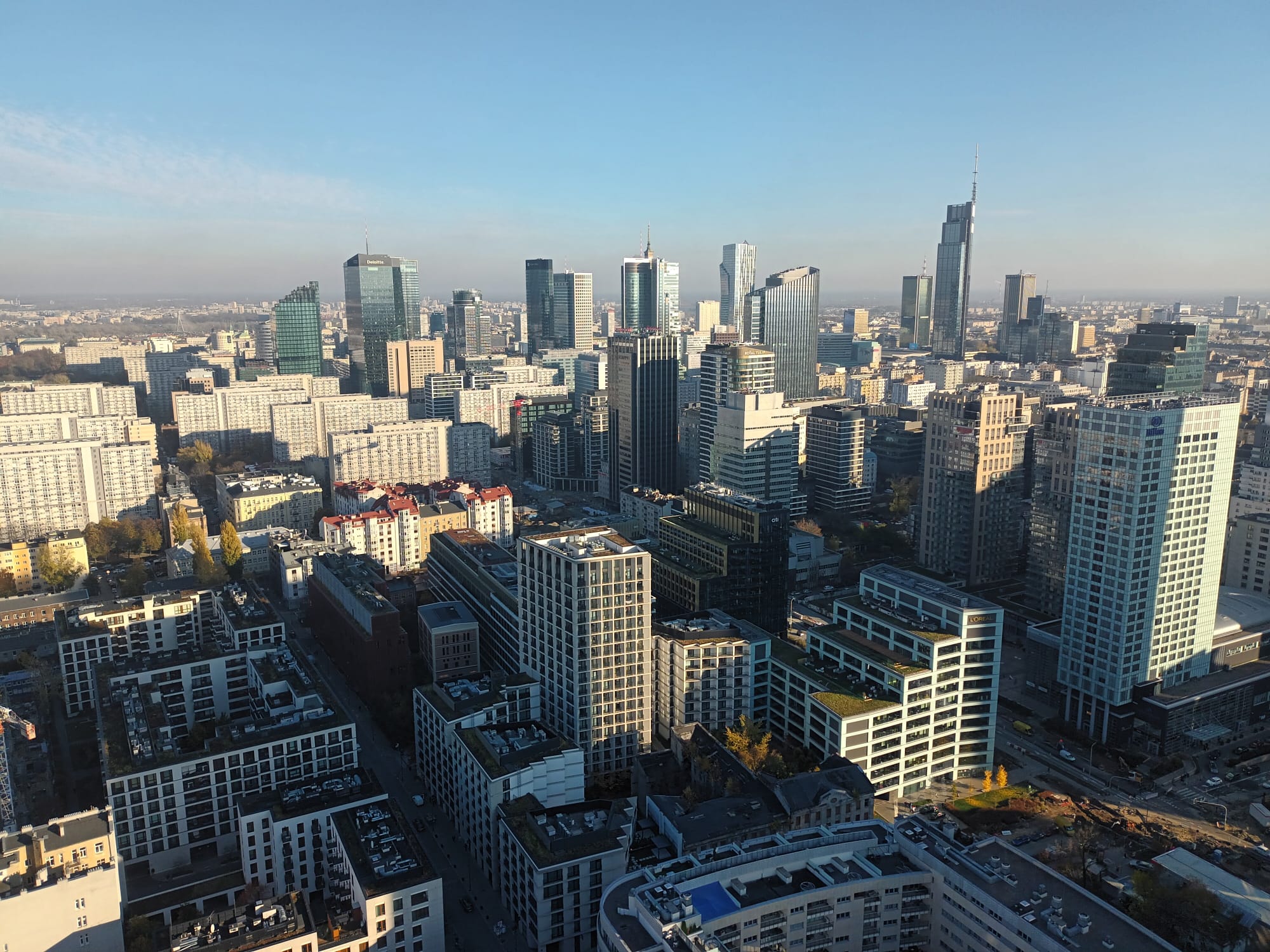
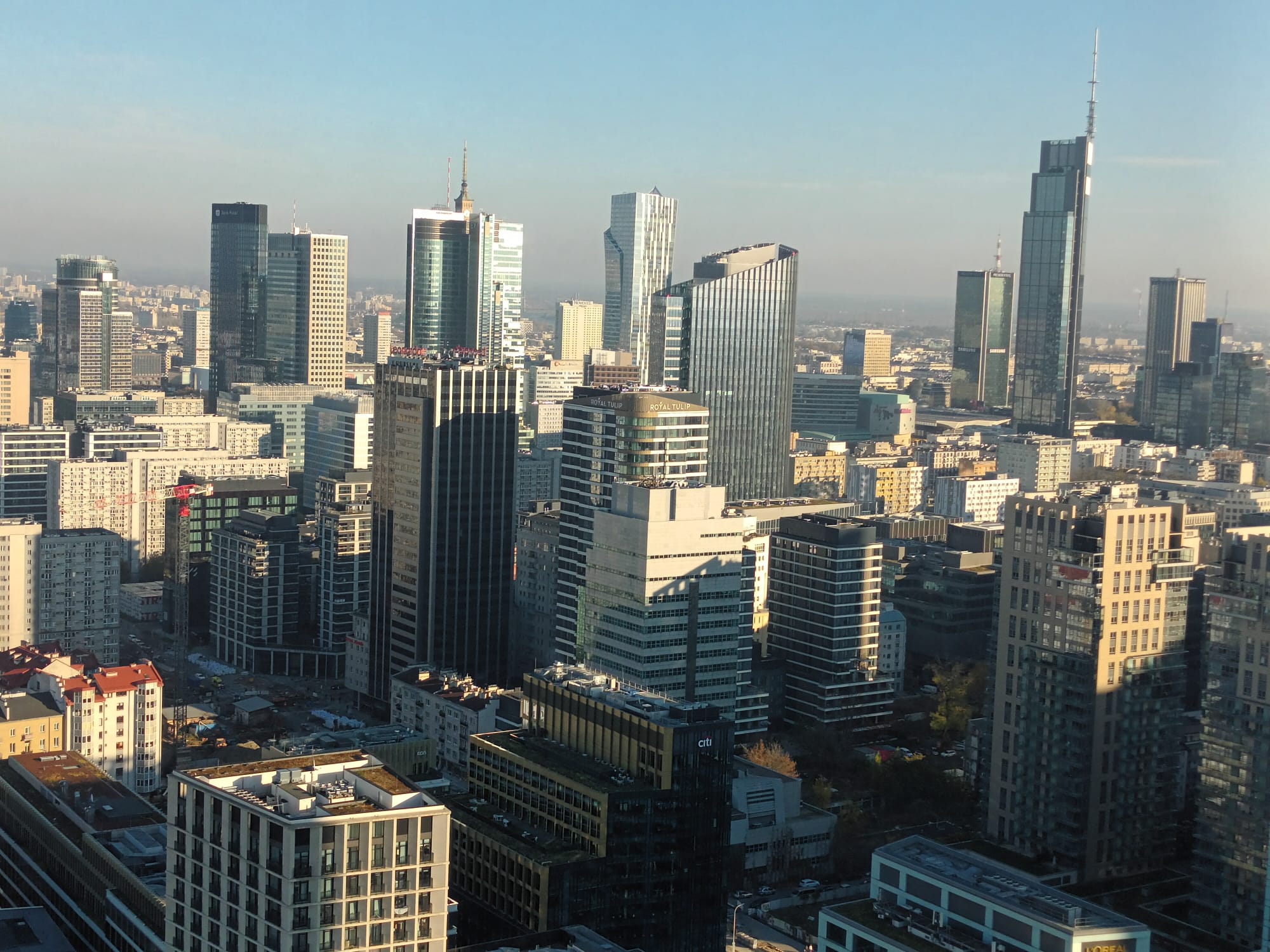
With a population approaching two million, Warsaw is Poland’s largest city and its political, financial, and commercial center. Its skyline reflects the ambitions of a country that has undergone dramatic changes over the past century. Glass office towers rise beside monumental government buildings, while broad avenues connect modern commercial districts with carefully reconstructed historic neighborhoods. The result is a metropolitan landscape that feels both European in tradition and increasingly international in character.
Yet Warsaw’s modern confidence becomes more meaningful when viewed against its past. Few European capitals have experienced such comprehensive destruction and reconstruction. Much of what visitors admire today, including historic palaces, churches, public squares, and traditional streets, had to be recreated after the devastation of World War II. Warsaw is therefore not simply a city with an interesting history. It is a living demonstration of how architecture, culture, and collective memory can survive even when much of the physical city has disappeared.
The Royal Way Preserves the Elegance of Old Warsaw
One of the best places to begin exploring Warsaw is the Royal Way, a magnificent historic route connecting important royal residences, churches, monuments, and public spaces. Its elegant facades, grand hotels, and impressive government buildings recall the city’s earlier reputation as one of Europe’s most sophisticated capitals. The route remains popular with residents and visitors, creating an atmosphere where historical grandeur meets the relaxed rhythm of contemporary urban life.
Among the notable buildings along this avenue is the Presidential Palace, which reflects the political importance Warsaw has maintained throughout Poland’s modern history. The surrounding streets are equally attractive, with cafes, restaurants, and traditional shops bringing activity to the historic district. A visit would hardly be complete without trying pączki, Poland’s beloved filled doughnuts. At the famous Blikle bakery, these traditional pastries are particularly popular, with varieties filled with rose jam offering a taste of Polish culinary heritage.
The Royal Way also demonstrates how Warsaw has managed to preserve its identity while embracing modernity. Its architecture evokes the city’s aristocratic past, but the people filling its streets represent a younger, more internationally connected Poland. The contrast is particularly striking in a capital that has spent decades rebuilding its economy, institutions, and international standing.
A Royal Castle That Represents Polish Sovereignty
Warsaw’s Old Town is among the city’s most remarkable achievements in historical reconstruction. At its center stands the Royal Castle, a building that has symbolized Polish sovereignty and national identity for more than four centuries. Its richly decorated interiors, gilded halls, elaborate chandeliers, and ceremonial rooms provide a glimpse into the political and cultural ambitions of Poland’s former monarchy.
The castle also tells a complicated story about the country’s political development. For centuries, Poland was an influential European kingdom, but the disappearance of its native royal dynasty created a political system in which foreign monarchs could be elected by the nobility. Although the arrangement reflected an unusual form of aristocratic political participation, some rulers failed to protect the country’s long-term interests. Internal divisions and external interference gradually weakened the state.
The consequences became catastrophic in 1795, when Poland was partitioned among Prussia, Austria, and Russia. The country disappeared from the political map of Europe for more than a century. Despite losing its independence, however, Polish society maintained its language, traditions, religious institutions, and cultural identity. The restoration of Polish independence in 1918, following World War I, marked the return of a nation that had survived generations of foreign domination.
Today, the reconstructed Royal Castle stands as a powerful reminder of that national persistence. Its existence is not merely an architectural achievement but also a statement that Poland’s political identity survived even when its independent state disappeared.
The Old Town Celebrates the Spirit of Polish Life
Beyond the Royal Castle, Warsaw’s Old Town offers an inviting atmosphere of cobbled streets, colorful buildings, restaurants, and lively public squares. The Market Square is particularly attractive, surrounded by reconstructed historic facades that recreate the appearance of the city before its destruction. Tourists gather here throughout the year, while restaurants and cafes provide a relaxed setting for experiencing everyday Polish culture.
One of the square’s most recognizable features is the Warsaw Mermaid, a symbol closely associated with the city’s identity. According to local tradition, the mermaid protects Warsaw and its inhabitants. Her image appears throughout the city, including on monuments, public decorations, and souvenirs. The sculpture represents more than a popular tourist attraction; it reflects the relationship between the city’s historical imagination and its contemporary identity.
Nearby fountains and public spaces create an atmosphere that feels particularly welcoming during warmer months. Children play around the water, families gather, and visitors enjoy the surrounding architecture. These ordinary scenes are important because they reveal another dimension of Warsaw’s recovery. The city is no longer defined exclusively by the tragedy of its past. It has become a place where people can enjoy public life, celebrate their culture, and build new memories.
Chopin and the Cultural Identity of Poland
Music is another essential part of Warsaw’s cultural character, particularly through the enduring legacy of Frédéric Chopin. Born in Poland in 1810, Chopin became one of the most influential composers of the Romantic period. Although much of his professional life was spent in Paris, his connection with Poland remained central to his artistic identity.
His presence is particularly visible in Warsaw’s parks, where a monument dedicated to the composer stands beneath the branches of a willow tree. The setting reflects the romantic image of Poland that many people associate with Chopin’s music. His compositions are often understood as expressions of longing, memory, and emotional attachment to his homeland.
During summer Sundays, open-air Chopin concerts attract large audiences. Visitors and residents gather in the park to listen to performances in a peaceful outdoor environment. These events demonstrate how classical music remains part of everyday cultural life rather than being confined to concert halls and formal institutions.
For Warsaw, Chopin represents more than an internationally celebrated composer. His music connects the modern capital with a period when Polish national identity was being preserved through art and cultural expression despite the absence of an independent state.
Remembering the Jewish History of Warsaw
Warsaw’s history cannot be fully understood without recognizing the extraordinary contribution of its Jewish community. Before World War II, Poland was home to one of the largest Jewish populations in the world, and Warsaw was the largest Jewish city in Europe. Jewish communities had been established in Polish territories for centuries, contributing significantly to commerce, education, literature, religious life, and urban culture.
The POLIN Museum of the History of Polish Jews provides an extensive account of this thousand-year relationship. Its exhibitions trace the development of Jewish life in Poland, beginning with medieval settlement and continuing through periods of cultural flourishing, discrimination, persecution, and ultimately the Holocaust.
During the Middle Ages, relative tolerance under several Polish rulers allowed Jewish communities to become established in towns and cities. Many lived in settlements known as shtetls, where religious institutions, markets, and community traditions shaped everyday life. Wooden synagogues, often decorated with elaborate paintings and symbolic designs, reflected the distinctive artistic and spiritual traditions of these communities.
The situation changed significantly after Poland regained independence in 1918. Jewish citizens gained full political rights, including citizenship and voting rights, while Jewish newspapers, cultural organizations, schools, and businesses expanded. Warsaw became an important center of Jewish intellectual and cultural life during the interwar period.
This flourishing community was almost entirely destroyed following Nazi Germany’s invasion of Poland in 1939. Jewish residents were forced into the Warsaw Ghetto, where overcrowding, starvation, disease, and systematic persecution created unbearable living conditions. Eventually, hundreds of thousands of people were deported to Nazi extermination camps, particularly Treblinka.
In 1943, as the remaining inhabitants realized that deportation and death were imminent, Jewish resistance fighters launched the Warsaw Ghetto Uprising. Despite their limited weapons and desperate circumstances, they resisted German forces for weeks. The uprising was ultimately crushed, and most of those who remained in the ghetto were killed.
The Holocaust resulted in the murder of approximately six million European Jews, with occupied Poland becoming one of the principal centers of Nazi extermination. Warsaw’s monuments and museums preserve the memory of this catastrophe, ensuring that the destruction of Jewish life remains an essential part of the city’s historical understanding.
The Warsaw Uprising and the Destruction of the City
The tragedy of Warsaw did not end with the destruction of the Jewish community. In August 1944, another uprising erupted, this time led by the Polish Home Army against Nazi occupation. The resistance movement hoped to liberate the capital before Soviet forces entered the city, allowing Poland to establish its own independent political future.
The fighting lasted for 63 days. Polish resistance fighters confronted a much better-equipped German military, while civilians faced bombardment, executions, shortages of food, and the destruction of entire neighborhoods. Despite extraordinary courage, the uprising was defeated in October 1944.
The German leadership subsequently ordered the systematic destruction of Warsaw. Buildings were demolished, historic monuments were damaged, and entire residential districts were reduced to rubble. By the end of the war, much of the city had been devastated.
The Soviet Army, which had advanced toward the eastern side of the Vistula River, did not provide the assistance that the Polish resistance desperately needed during the uprising. After German forces withdrew, Soviet troops entered the devastated capital, and Poland subsequently came under communist political control.
For more than four decades, Warsaw developed under a political and economic system dominated by the Soviet Union. The city had to rebuild not only its physical infrastructure but also its political and economic institutions. Nevertheless, the determination to restore Warsaw’s historic identity remained strong.
Rebuilding a Capital from Almost Nothing
One of the most remarkable aspects of Warsaw is the reconstruction of its historic center. Following the war, Polish architects, historians, engineers, and ordinary citizens worked to restore buildings that had been almost completely destroyed. Historical photographs, architectural drawings, paintings, and surviving fragments provided the basis for recreating the city’s earlier appearance.
The reconstruction of the Old Town and Royal Castle became a national project. Rather than accepting the destruction as permanent, Poland chose to restore its architectural heritage as a symbol of continuity. This work was so significant that Warsaw’s Historic Centre was eventually recognized as a UNESCO World Heritage Site in 1980.
However, reconstruction did not mean that every building in Warsaw was returned to its original appearance. The city also developed new residential neighborhoods, public infrastructure, and monumental buildings reflecting the architectural preferences of the postwar period. Consequently, Warsaw became a fascinating mixture of reconstructed historical architecture and modern urban planning.
This combination gives the city a distinctive character. Visitors can move from medieval-inspired streets to monumental socialist-era buildings and contemporary glass towers within a relatively short distance. The architectural contrasts reveal different chapters of Poland’s political and economic history.
A Modern European Capital with a New Urban Lifestyle
Contemporary Warsaw has developed a reputation as one of Central Europe’s most dynamic metropolitan economies. Banking, professional services, technology, international business, and government institutions contribute to its economic importance. The city has attracted international companies and investment while developing a growing ecosystem of entrepreneurs, professionals, and technology businesses.
Its younger population has also transformed the city’s social and cultural landscape. Restaurants offer cuisines from different parts of the world, while contemporary cafes, creative spaces, and entertainment venues contribute to an increasingly cosmopolitan atmosphere. Former industrial buildings have found new purposes as commercial and cultural destinations.
The popularity of post-industrial architecture is particularly visible in the transformation of old factories and power stations. Their red-brick structures, industrial interiors, and large open spaces have been converted into restaurants, shopping areas, entertainment venues, and social gathering places. Rather than demolishing every reminder of its industrial past, Warsaw has found ways to integrate these buildings into its contemporary lifestyle.
This approach reflects a broader transformation in how the city understands its heritage. Historical buildings are not simply preserved as monuments to the past; they can also become productive spaces that support business, tourism, creativity, and community activities.
Warsaw’s Resilience Is Its Greatest Attraction
Warsaw’s appeal lies in the extraordinary contrast between its difficult history and its contemporary energy. Its reconstructed Old Town, royal residences, museums, parks, and musical traditions offer visitors a rich cultural experience. Meanwhile, its modern business districts, international restaurants, and repurposed industrial spaces reveal a city that continues to reinvent itself.
Unlike destinations whose identities are primarily associated with preserved historical architecture, Warsaw offers something different. Much of its historic environment represents an extraordinary act of reconstruction, reminding visitors that cultural heritage can survive even when its physical foundations have been destroyed.
The city has experienced the disappearance of its independent state, foreign occupation, the Holocaust, two major uprisings, near-total destruction, and decades of communist rule. Yet it has emerged as a confident European capital with a strong economy and an increasingly international outlook.That is what makes Warsaw particularly compelling. Its greatest attraction is not simply the beauty of its reconstructed streets or the elegance of its historic palaces. It is the resilience of a society that refused to allow its history to determine its future.
Photos by : Andrzej Rutkowski