
(Business Lounge – Travel) Austria is a country where natural beauty, history, culture, and modern life come together in remarkable harmony. From the majestic peaks of the Alps to medieval castles, crystal-clear lakes, and elegant imperial cities, this Central European nation offers a diversity of experiences that few destinations can match. It is a land where classical music remains part of everyday life, historic architecture tells stories of powerful empires, and breathtaking landscapes invite travelers to slow down and appreciate the beauty of nature.
Although relatively small in geographical size, Austria has developed an international reputation for its high quality of life, strong economy, cultural heritage, and commitment to environmental protection. With a population of approximately 8.9 million, the country demonstrates how economic development and the preservation of natural landscapes can coexist. Mountains, forests, rivers, and lakes are not simply attractive features of the Austrian landscape; they are essential elements of the country’s identity and way of life.
Vienna, The Imperial Capital of Music and Culture
The journey through Austria naturally begins in Vienna, a capital whose elegance reflects centuries of imperial history. Once the center of the Habsburg Empire, the city remains one of Europe’s most impressive cultural destinations. Its grand boulevards, historic palaces, magnificent churches, and traditional coffee houses create an atmosphere that combines sophistication with everyday European life.
Vienna is internationally associated with classical music. The legacy of Wolfgang Amadeus Mozart, Franz Schubert, and Johann Strauss continues to shape its cultural identity. Music can be experienced in concert halls, opera houses, historic buildings, and even through performances in the city’s public spaces. The famous Schönbrunn Palace, St. Stephen’s Cathedral, and the Vienna State Opera are among the landmarks that make the capital an essential destination for visitors.
Vienna also has a distinctive culinary culture. Its traditional coffee houses are more than places to enjoy a cup of coffee; they are important social institutions where conversations, literature, and intellectual life have flourished for generations. Sachertorte, the famous chocolate cake associated with the city since the nineteenth century, and traditional apple strudel remain among the most recognizable Austrian specialties.Another attraction is the Wiener Riesenrad, the historic Ferris wheel in the Prater amusement park. Operating since 1897, it has become one of Vienna’s most recognizable landmarks, offering visitors panoramic views of the city.
Tyrol and the Majestic Austrian Alps
Beyond Vienna, the landscape changes dramatically as the Austrian Alps dominate the horizon. Tyrol represents one of the country’s most authentic Alpine regions, where traditional villages, wooden chalets, green valleys, and dramatic mountain peaks create an unforgettable setting.
The region attracts visitors throughout the year. Winter brings international travelers seeking skiing and snowboarding opportunities, while spring and summer transform the mountains into a paradise for hiking, cycling, and outdoor exploration. Traditional celebrations, local craftsmanship, and regional cuisine preserve a cultural identity that has developed over generations.
Among the most spectacular Alpine experiences is the Grossglockner High Alpine Road. Stretching approximately 48 kilometers, this celebrated mountain route takes travelers through extraordinary scenery toward Austria’s highest mountain, Grossglockner. Every turn reveals another dramatic landscape, from glaciers and alpine meadows to rugged mountain slopes and distant peaks. It is not simply a driving route but an opportunity to experience the scale and beauty of the Austrian Alps.
Hallstatt, A Village Like a Living Postcard
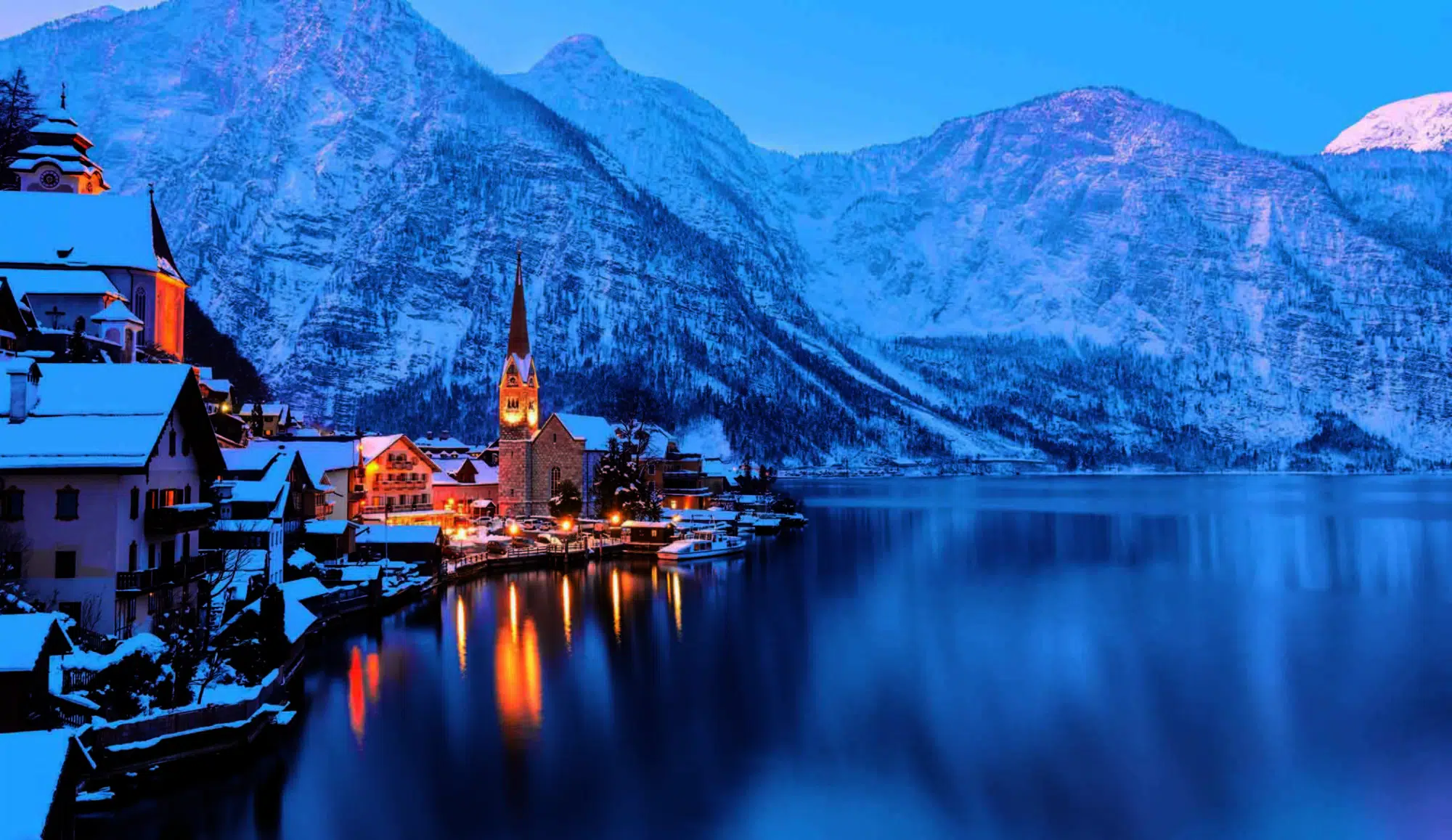
Few places capture the imagination of international travelers quite like Hallstatt. Situated beside a beautiful Alpine lake, this historic village is famous for its traditional houses, narrow streets, colorful balconies, and spectacular mountain surroundings.
The village appears almost suspended between the mountains and the water. Its historic buildings descend toward the lake, creating reflections that change throughout the day as sunlight moves across the surrounding peaks. The Lutheran church tower has become one of the most recognizable visual symbols of Austria.
Hallstatt’s history is closely connected with salt mining, an activity that contributed to the development and prosperity of the region over thousands of years. Today, visitors come to discover its historic streets, enjoy boat trips, and experience the peaceful atmosphere of the lakeside setting.The surrounding Salzkammergut region adds further attractions, with numerous lakes, forests, and traditional settlements. It is a destination that demonstrates how cultural heritage and natural beauty can create a powerful tourism identity.
Salzburg, The Birthplace of Mozart
Salzburg is another essential destination for travelers interested in Austrian history and music. Located near the German border and surrounded by Alpine scenery, the city is internationally recognized as the birthplace of Mozart.Its historic center, designated a UNESCO World Heritage Site, is characterized by Baroque architecture, elegant squares, and narrow streets. Above the city stands Hohensalzburg Fortress, an impressive medieval structure that provides panoramic views of Salzburg and the surrounding mountains.
Getreidegasse, one of the city’s most famous shopping streets, is particularly attractive for its traditional iron shop signs and historic buildings. Mozart’s birthplace has also been preserved as a museum, allowing visitors to explore the life and legacy of one of classical music’s greatest composers.Salzburg’s cultural importance extends beyond its historic monuments. The Salzburg Festival attracts international audiences with performances of opera, classical music, and theater. Mirabell Gardens, meanwhile, offer a peaceful green space surrounded by impressive architecture.
Graz, Where History Meets Innovation
Austria’s second-largest city, Graz, offers a different perspective on the country’s urban development. Its historic center combines Renaissance and Baroque architecture, while its universities, cultural institutions, and creative industries give the city a distinctly contemporary atmosphere.
Schlossberg Hill dominates the city skyline, with its famous clock tower, the Uhrturm, serving as one of Graz’s most recognizable landmarks. From the hilltop, visitors can enjoy impressive views across the historic center and surrounding landscape.Graz demonstrates that Austria’s cultural identity is not limited to its imperial past. It is also a place of innovation, education, design, and modern architecture. The city’s combination of historic preservation and contemporary creativity makes it one of the country’s most interesting urban destinations.
Innsbruck and the Alpine Lifestyle
Known as the Capital of the Alps, Innsbruck offers a rare combination of mountain scenery and historic urban life. Located in the heart of Tyrol, the city is surrounded by impressive mountain ranges that create a spectacular natural backdrop.
Its historic center is famous for the Golden Roof, a landmark associated with Emperor Maximilian I. The Imperial Palace and colorful medieval buildings provide further evidence of the city’s important role during the Habsburg period.Innsbruck is also internationally recognized as a destination for winter sports. Having hosted the Winter Olympic Games, the city has developed a strong sporting identity. Visitors can move from historic streets to mountain environments within a relatively short journey, making it an attractive destination in every season.
Zell am See and Schladming-Dachstein
For travelers seeking a combination of outdoor recreation and picturesque Alpine towns, Zell am See is particularly appealing. Located beside Lake Zell, this small town combines a medieval atmosphere with modern tourism facilities.Its historic center features traditional buildings and the prominent tower of St. Hippolytus Church. Restaurants and cafes overlooking the lake create an inviting environment, while the surrounding mountains offer opportunities for skiing, hiking, and cycling.
Schladming-Dachstein, in the Styrian Alps, provides another remarkable destination. During winter, its ski slopes attract international visitors, while warmer months transform the region into a network of hiking and mountain biking trails. The Dachstein massif, with its glaciers and spectacular Skywalk observation platform, offers some of the most memorable views in the Austrian Alps.
The Wachau Valley and Austria’s Wine Country
Austria’s attractions extend beyond mountains and historic cities. Along the Danube, the Wachau Valley presents a landscape of terraced vineyards, orchards, medieval villages, and historic monasteries.Recognized by UNESCO as a World Heritage cultural landscape, the region demonstrates the long relationship between human activity and the natural environment. Vineyards climb the hillsides, while apricot orchards add seasonal colors to the countryside.
The valley is particularly famous for its white wines, which have earned international recognition. Traditional wine villages and family-owned cellars offer opportunities to experience Austria’s agricultural heritage and regional gastronomy.
Dürnstein is one of the most picturesque settlements in the region. Its blue abbey tower, narrow streets, and surrounding vineyards create a distinctive landscape. The ruins of its medieval castle are associated with the imprisonment of Richard the Lionheart, adding another historical dimension to the destination.Melk, located further along the Danube, is dominated by its magnificent Benedictine Abbey. Its Baroque architecture, impressive library, and richly decorated church make it one of Austria’s most significant cultural monuments.
Salzkammergut, A Paradise of Lakes and Mountains
The Salzkammergut region is among Austria’s most attractive natural destinations. Its landscape includes dozens of lakes surrounded by mountains, forests, and traditional Alpine settlements.Hallstatt and St. Wolfgang are among its best-known destinations, while Bad Ischl offers a different experience through its historic thermal baths and imperial heritage. The region became closely associated with the Habsburg dynasty, which used Bad Ischl as a summer retreat.
St. Wolfgang, situated beside Wolfgangsee, is particularly attractive for its historic pilgrimage church, artisan shops, and beautiful waterfront. Visitors can enjoy boat trips across the lake or take the historic Schafberg railway toward the mountain summit, where spectacular views extend across several Alpine lakes.
Schafberg itself is one of the region’s most rewarding panoramic destinations. The cog railway provides a memorable journey through mountain landscapes before reaching the summit, where visitors can admire the surrounding lakes and peaks.
Burgenland and the Other Side of Austria
Eastern Austria offers a landscape that contrasts sharply with the mountainous west. Burgenland, bordering Hungary, is characterized by gentle hills, vineyards, open plains, and Lake Neusiedl. The region enjoys a different climate from the Alpine areas, making it particularly suitable for wine production. Its vineyards produce distinctive red wines and sweet white wines, while historic castles reflect a past shaped by changing political borders.
Lake Neusiedl National Park is an important destination for nature lovers and birdwatchers. Its wetlands and surrounding ecosystems provide habitats for numerous bird species, making the region significant for European biodiversity.
Natural Wonders That Define Austria
Austria’s natural attractions extend far beyond its famous lakes and mountain roads. The Krimml Waterfalls, located in the Hohe Tauern National Park, are among the country’s most spectacular natural landmarks. With a total vertical drop of approximately 380 meters across three stages, they create an extraordinary display of water and mist.
The Gosau Valley offers another unforgettable landscape, particularly around Lake Gosausee, where the dramatic peaks of the Dachstein massif are reflected in clear mountain waters. Traditional Alpine villages, grazing cattle, and forest trails complete the picture of rural Austrian life.
Grüner See in Styria is especially remarkable because its appearance changes with the seasons. During winter, the area resembles a park, but melting snow from the surrounding mountains causes water levels to rise during spring and summer. The resulting lake is famous for its remarkable transparency and emerald-green appearance.Another architectural attraction is Ort Castle, situated on a small island in Lake Traunsee. Connected to the mainland by a wooden bridge, this historic castle appears almost like an illustration from a fairy tale.
Bad Gastein and Bad Ischl, The Legacy of Imperial Tourism
Austria also has a long tradition of thermal tourism. Bad Gastein, located in the Gastein Valley, is famous for its dramatic mountain setting and waterfall that flows through the center of the town.Its grand Belle Époque hotels reflect the period when European aristocrats and wealthy travelers visited the region for its thermal waters and mountain atmosphere. Today, its historic architecture, thermal facilities, and surrounding natural scenery continue to attract visitors.
Bad Ischl provides another perspective on Austria’s imperial past. The Habsburgs selected the town as a summer residence, and its historic buildings preserve the atmosphere of a former royal retreat. The Kaiservilla, associated with Emperor Franz Joseph I, is particularly important in European history because it was where he signed the declaration of war against Serbia in 1914, marking the beginning of World War I.
The Semmering Railway, A Masterpiece of Engineering
Austria’s relationship with nature is also reflected in its engineering achievements. The Semmering Railway, completed in 1854, was one of the pioneering mountain railway projects in Europe. Recognized as a UNESCO World Heritage Site, the railway crosses challenging Alpine terrain through tunnels, bridges, and impressive stone viaducts. Its construction represented a major achievement in nineteenth-century engineering and transformed transportation across the region.
Today, the railway remains an extraordinary travel experience. Its route passes through forests, mountain valleys, and dramatic landscapes, demonstrating how infrastructure can connect communities while becoming a cultural attraction in its own right.
Austria, Where Quality of Life Meets Sustainable Tourism
What makes Austria particularly remarkable is the way it balances economic development, cultural preservation, and environmental responsibility. Its cities offer efficient infrastructure and high living standards, while its rural regions maintain strong connections with traditional agriculture, craftsmanship, and local customs.
Sustainability is increasingly important to the country’s development strategy. Renewable energy, particularly hydropower, plays a major role in its electricity system, while environmental protection remains central to the management of its forests, lakes, and Alpine ecosystems.
Tourism also reflects this relationship between economic opportunity and natural preservation. From winter sports resorts to wine-producing villages, Austria has developed a diversified tourism industry that generates economic activity while promoting its cultural and environmental assets.
Ultimately, Austria is much more than a collection of beautiful destinations. It is a country where classical music, imperial architecture, mountain traditions, modern innovation, and environmental awareness form a distinctive national character. From the elegant streets of Vienna to the peaceful shores of Hallstatt, from Salzburg’s musical heritage to the dramatic heights of Grossglockner, every journey reveals another dimension of this remarkable country.
Austria’s greatest attraction may therefore be its ability to bring together different experiences within a relatively small territory. It offers the grandeur of the Alps, the sophistication of historic cities, the tranquility of lakeside villages, and the richness of European cultural heritage. For travelers seeking both discovery and inspiration, Austria remains one of Europe’s most extraordinary destinations.