
(Business Lounge-Art) The Netherlands offers visitors far more than picturesque canals, historic streets, and charming architecture. For those who take the time to explore its museums, the country reveals a fascinating story of artistic achievement, social history, cultural exchange, and everyday life across different periods. A visit to Amsterdam’s Rijksmuseum provides an opportunity to experience these layers of Dutch heritage through paintings, historical portraits, and the magnificent building that houses them.
A Museum That Tells the Story of a Nation
The Rijksmuseum stands as one of the Netherlands’ most recognizable cultural landmarks. Its impressive red-brick façade, Gothic and Renaissance architectural elements, and prominent towers create a striking presence in the heart of Amsterdam. Beyond its architectural beauty, the museum serves as a gateway to the country’s artistic and historical identity.

The Rijksmuseum’s historic façade beside Amsterdam’s waterways.
Inside, spacious galleries, decorated vaulted ceilings, and carefully arranged collections guide visitors through centuries of European history. The museum experience is not limited to viewing famous paintings. It also encourages visitors to consider the people, traditions, economic activities, and cultural influences that shaped Dutch society.
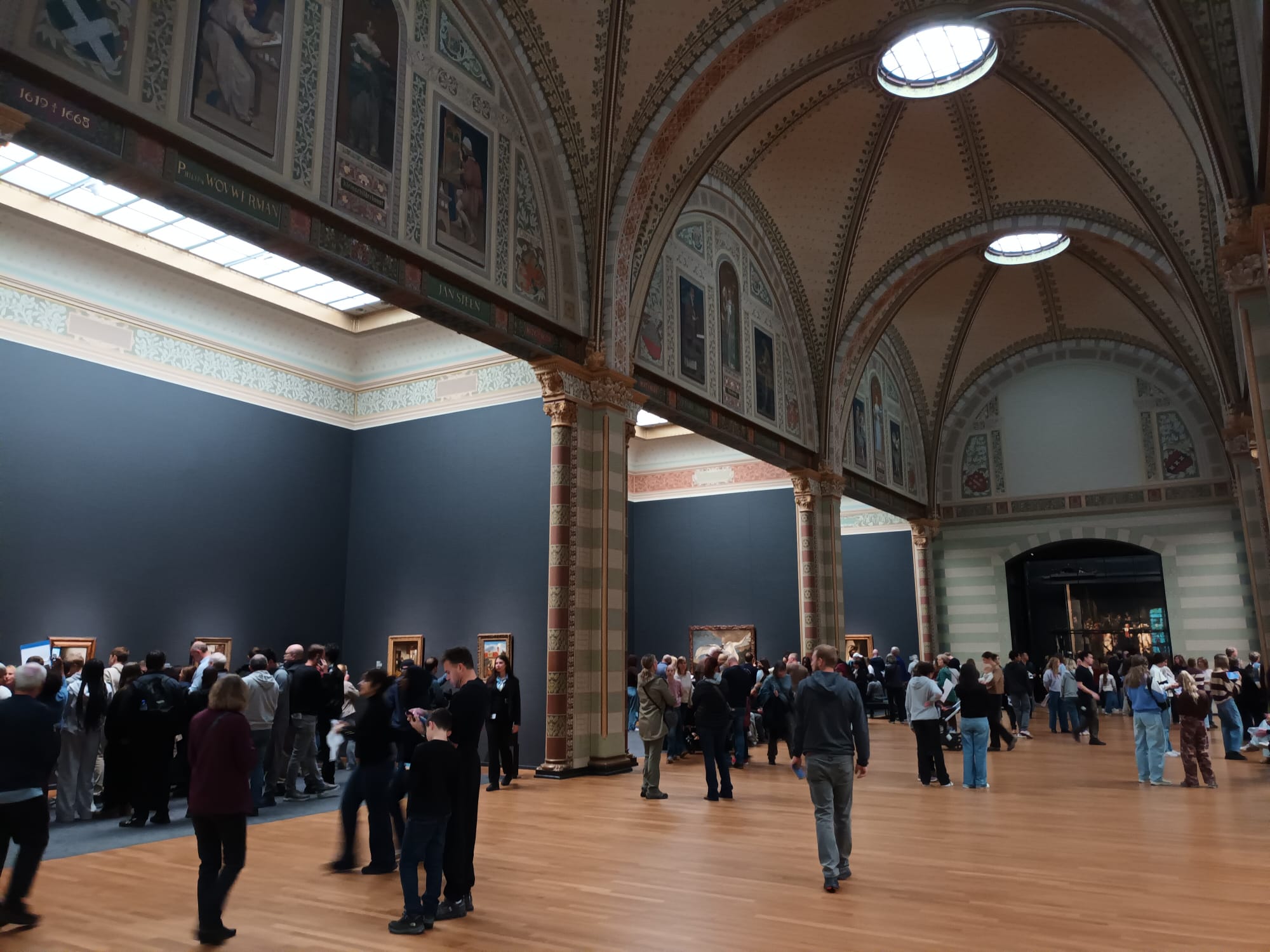
Visitors gather beneath the museum’s richly decorated vaulted ceilings.
The building itself contributes to the experience. Its grand halls and intricate architectural details remind visitors that museums are not merely places where objects are preserved, but institutions that connect the past with the present.
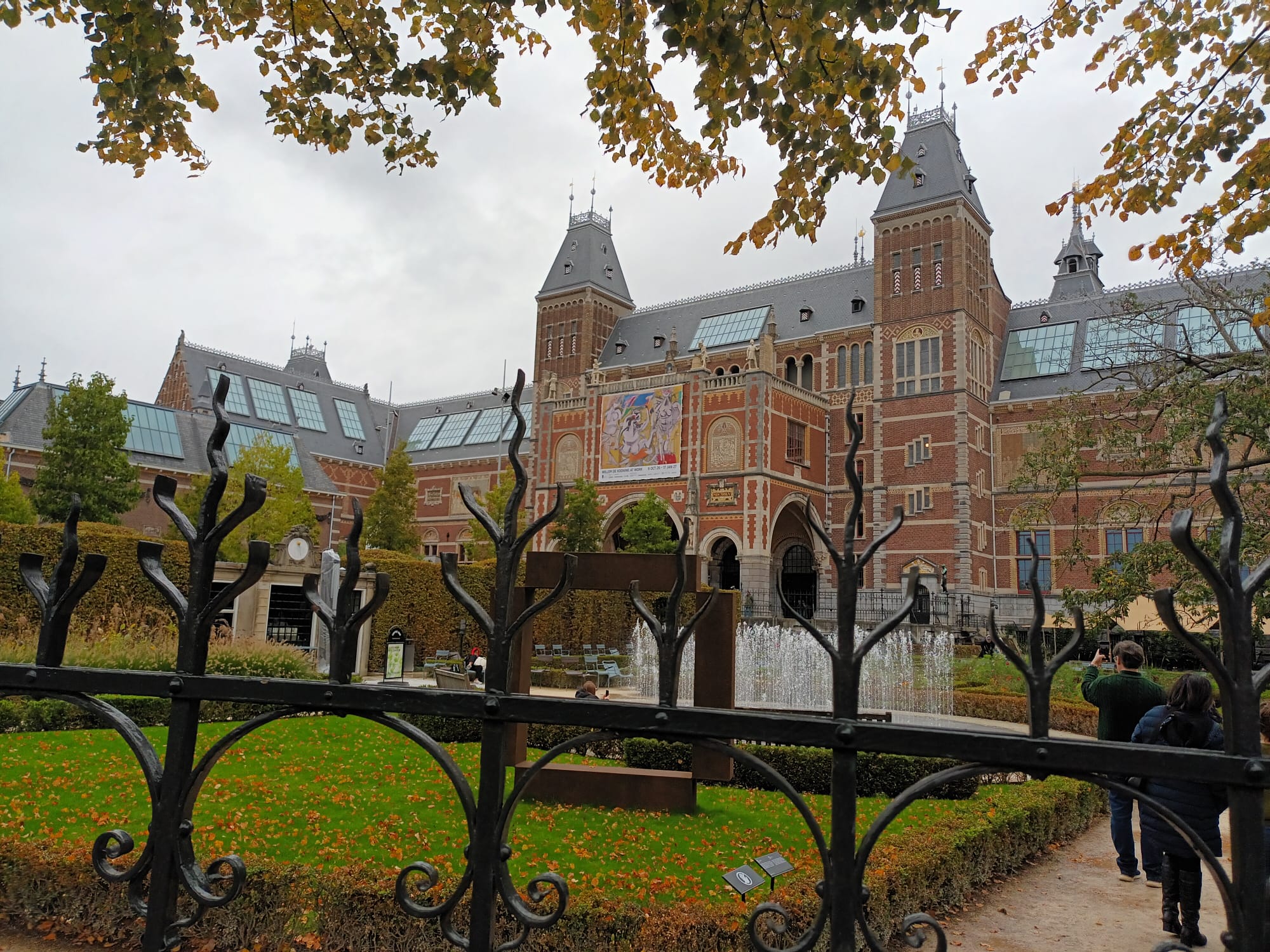
The museum and its gardens form part of Amsterdam’s distinctive cultural landscape.
Portraits That Reveal Identity and Tradition
Among the collections are portraits depicting individuals in distinctive clothing, including elaborate traditional dress, patterned textiles, and military-inspired uniforms. Such images offer a glimpse into how people presented themselves and how clothing could communicate status, occupation, cultural identity, and social position.
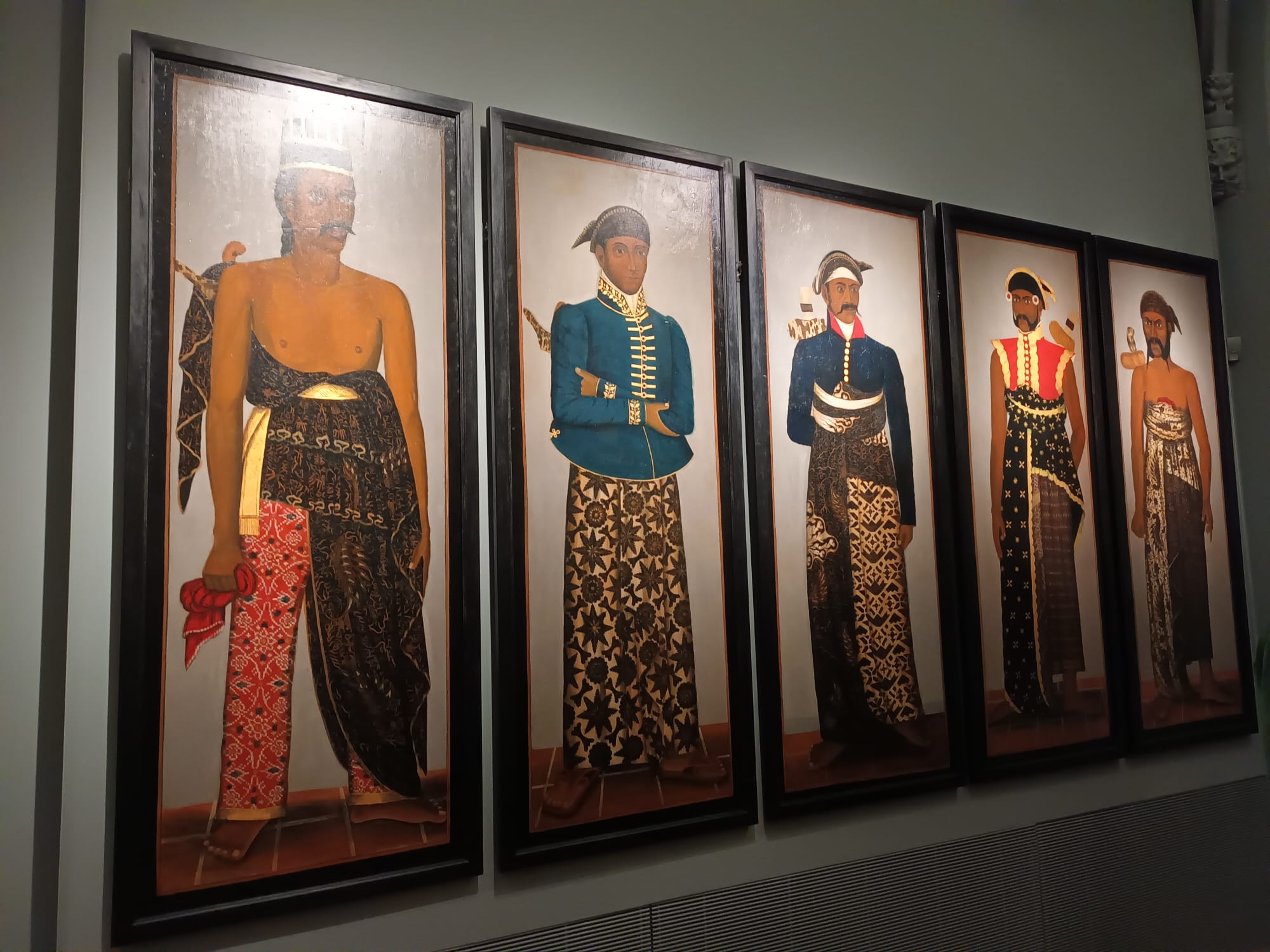
A series of historical portraits highlights clothing, textiles, and personal presentation.
The contrasting colours of the jackets, the intricate patterns of the fabrics, and the different styles of headwear create a visual record of personal appearance and historical fashion. Historical portraits can be appreciated not only for their artistic qualities but also for the questions they raise about identity, representation, and the relationships between societies.
Amsterdam developed as an important international trading centre, connecting Europe with regions across Asia, Africa, and the Americas. The movement of people and goods contributed to the circulation of textiles, artistic techniques, and cultural influences. These wider connections provide useful context for viewing works that reflect different traditions and forms of dress.
The Landscape and the Beauty of Everyday Life
Another painting presents a golden agricultural landscape, with fields stretching towards a distant farmhouse beneath a pale blue sky. Its warm tones and expressive brushstrokes transform an ordinary rural scene into a compelling study of light, colour, and the relationship between people and their surroundings.
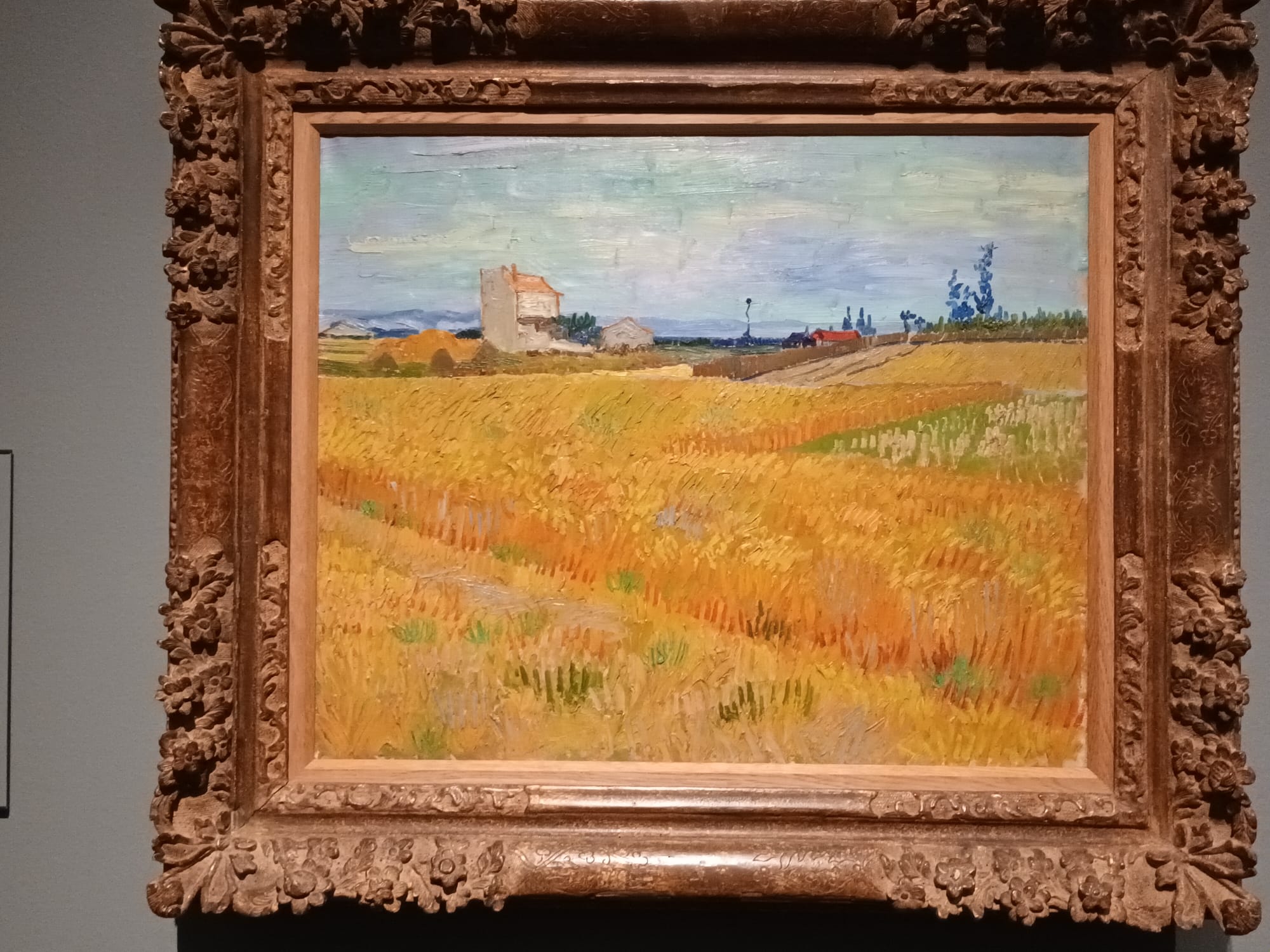
A golden field and distant farmhouse evoke the quiet beauty of the countryside.
Landscape painting has long occupied an important place in Dutch art. The countryside, waterways, villages, and changing skies provided artists with subjects that reflected both the natural environment and the rhythms of everyday life. The painting’s golden fields evoke the agricultural seasons and the quiet beauty of rural landscapes.
For travellers, such works provide another way to understand a destination. The Netherlands is often associated with its canals, windmills, and urban architecture, but its artistic heritage also preserves the landscapes and working environments that helped shape the nation.
Family, Music, and the Intimacy of Domestic Life
The museum’s portrait of a family offers a different perspective on history. Several figures are arranged together in an elegant interior, accompanied by musical instruments, books, and a small dog. The composition combines formal portraiture with details that suggest education, leisure, family relationships, and domestic culture.
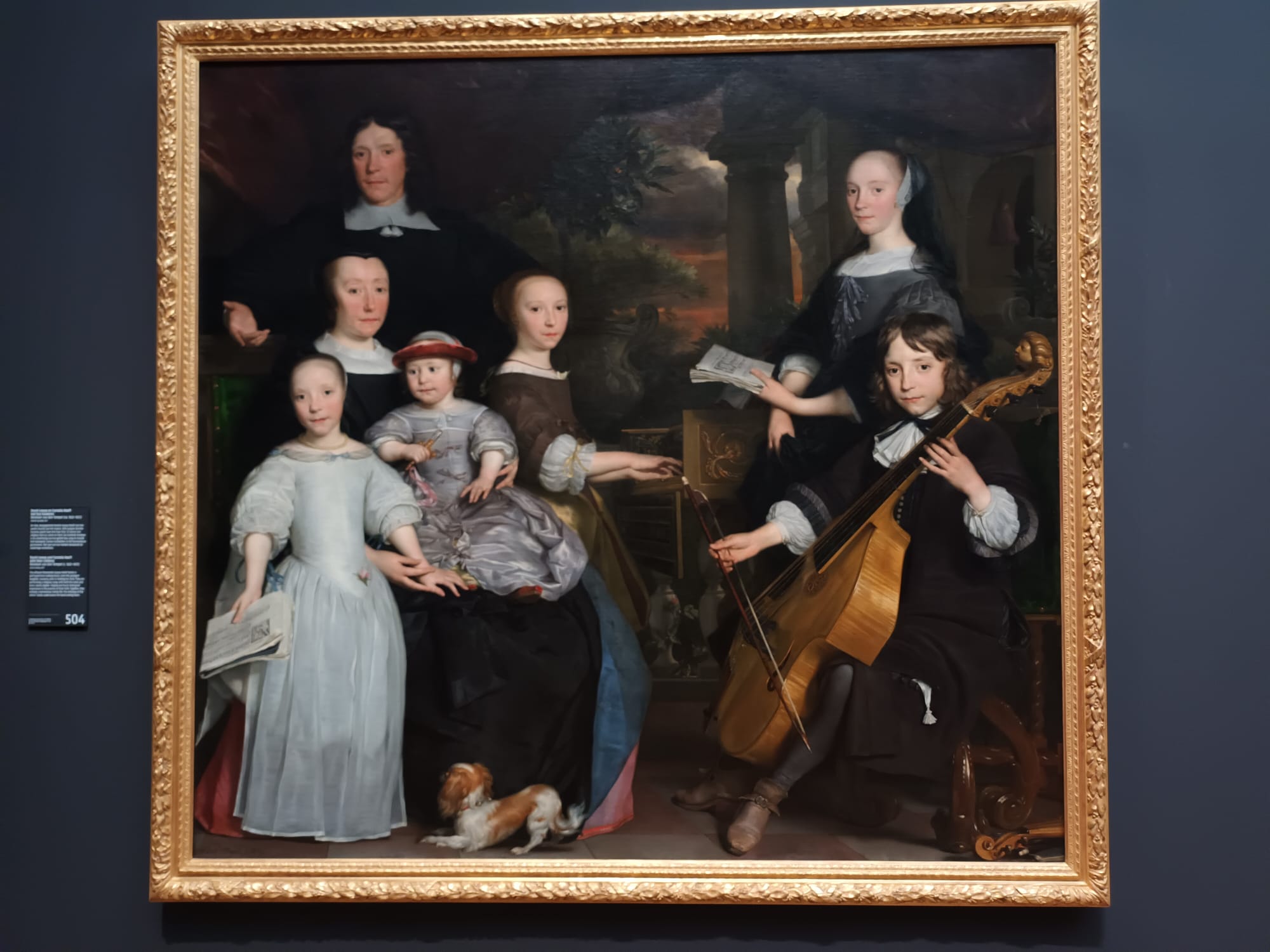
A family portrait brings domestic life, music, and social customs into view.
The musicians and reading materials are especially revealing. They suggest that art can preserve more than physical appearances: it can also record the values and aspirations of the people who commissioned or appeared in these works. Family portraits could communicate wealth, lineage, respectability, and social ambition, while details such as children, musical instruments, and a pet introduce a more intimate dimension.
These paintings make the past feel less distant by reminding viewers that people in earlier centuries also valued companionship, learning, and shared experiences.
A Celebration of Abundance and Artistic Skill
A richly detailed still-life painting presents an abundant arrangement of fruit, seafood, tableware, musical objects, and animals. A colourful parrot occupies one side of the composition, while grapes, peaches, and other foods are arranged across a table and surrounding surfaces.
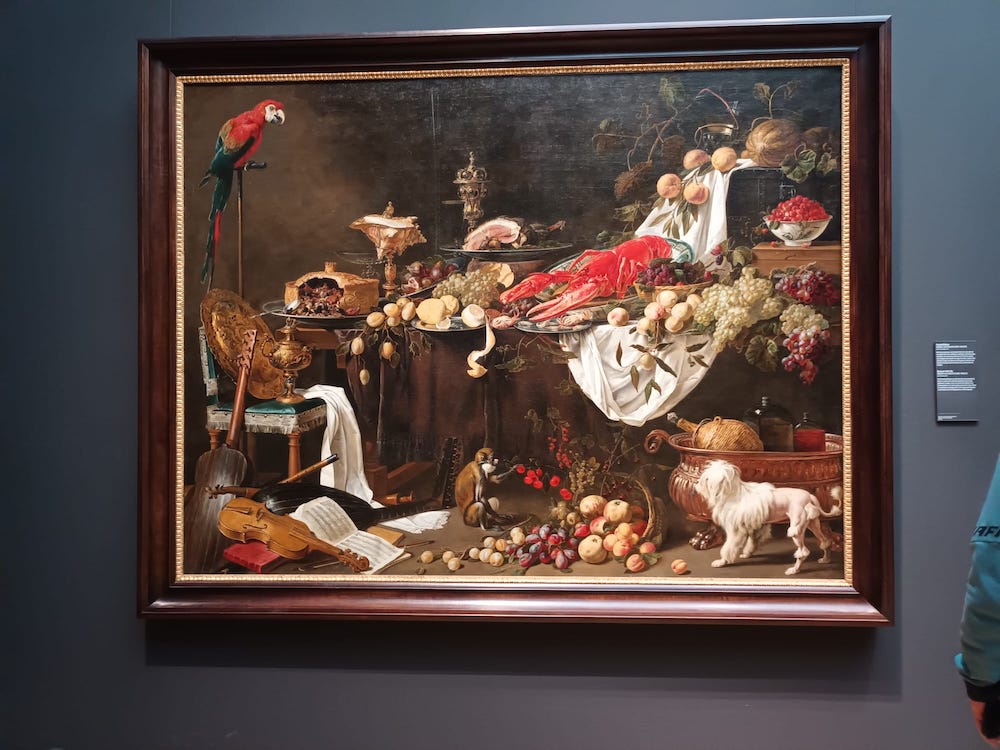
A richly composed still life displays food, musical objects, and carefully observed textures.
The painting invites viewers to admire the artist’s ability to reproduce different textures: the reflective surfaces of metal vessels, the softness of fruit, the delicate folds of white fabric, and the varied colours of the objects on display.
Still-life painting flourished in the Netherlands during the seventeenth century, a period associated with the Dutch Golden Age. The growth of international commerce and urban prosperity helped create a market for paintings reflecting household life, material possessions, food, and the natural world. Depending on the work, such objects could also suggest the passage of time or the temporary nature of material abundance.
Winter on Canvas: Life in a Frozen Landscape
A panoramic winter scene captures a broad expanse of snow-covered ground filled with people going about their activities. Small groups gather across the landscape, creating a sense of movement and community beneath a pale, subdued sky.
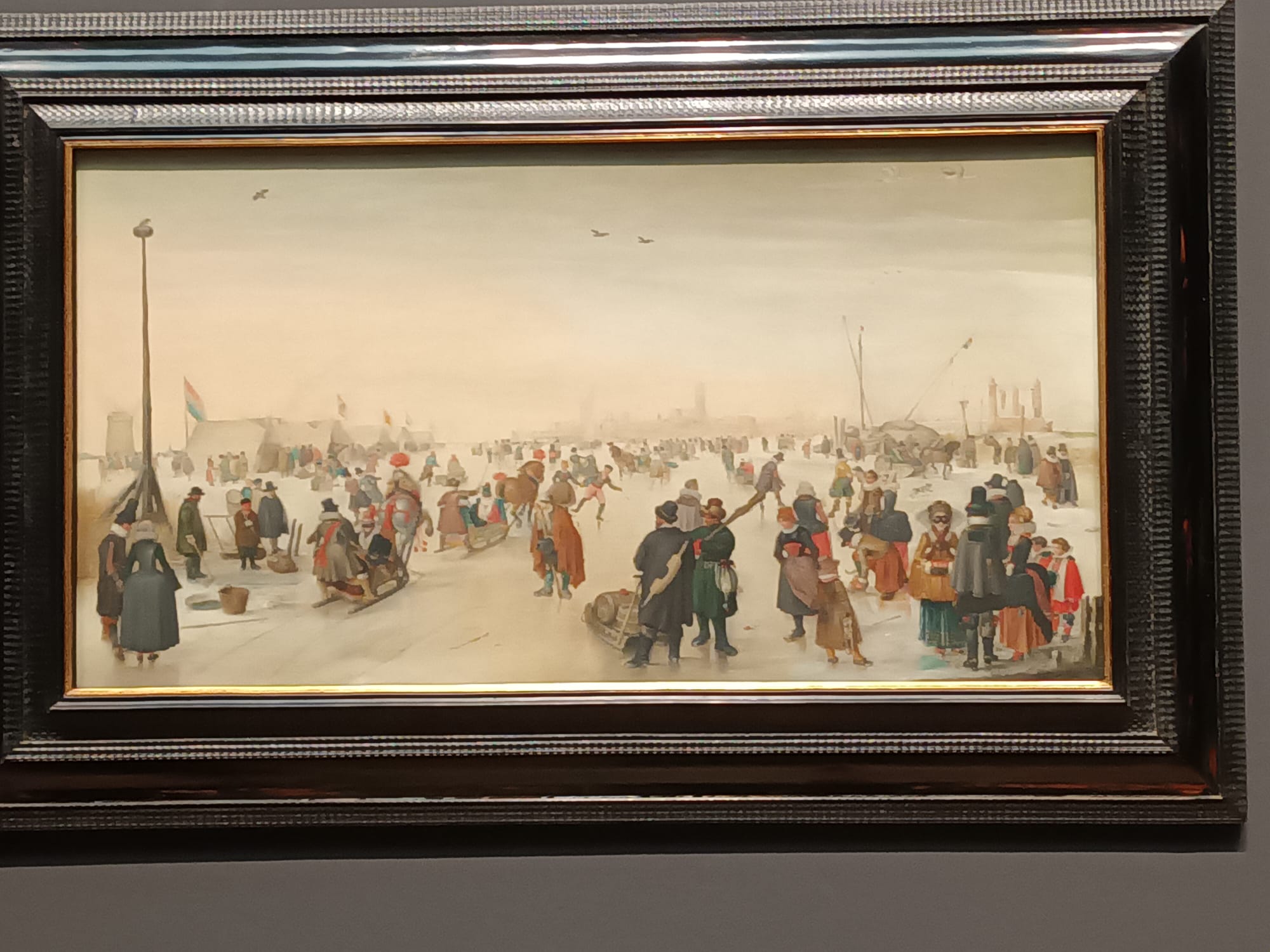
A winter landscape depicts people gathering across a broad, snow-covered scene.
Winter imagery has a special place in the artistic tradition of the Low Countries, where frozen waterways historically provided opportunities for skating, travel, trade, and recreation. Such scenes often portray winter not simply as a season of hardship, but as a shared social experience.
The painting’s restrained colours and numerous small figures encourage viewers to look closely. Each group contributes to the larger composition, transforming the snowy landscape into a record of communal life and the relationship between climate, landscape, and society.
Art and Architecture as a Cultural Journey
A visit to the Rijksmuseum brings together several experiences: the pleasure of viewing paintings, the discovery of historical traditions, and the opportunity to appreciate an architectural landmark. The museum’s galleries encourage visitors to move between different subjects and periods, discovering connections that may not be immediately apparent.
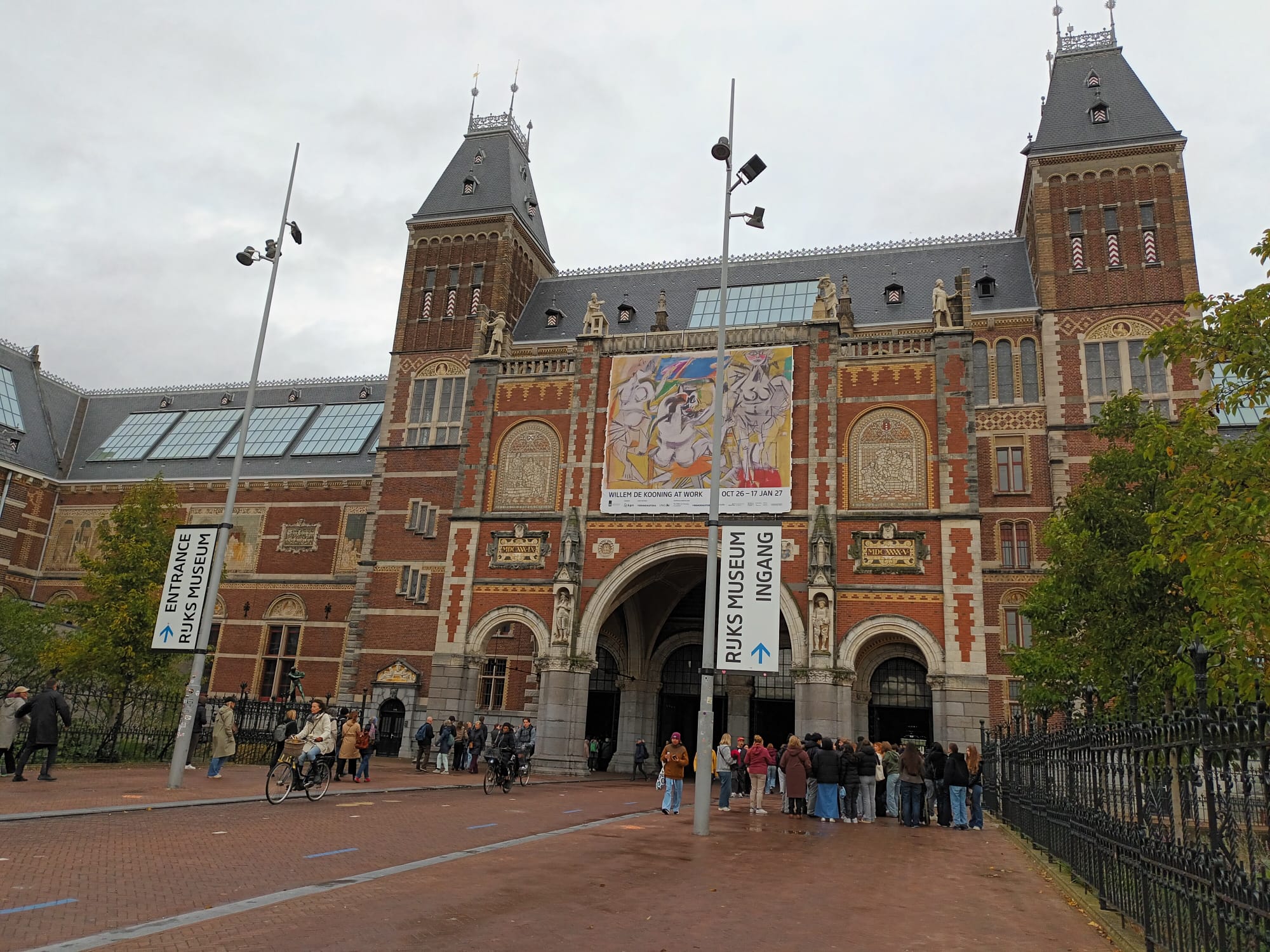
Visitors arrive at the Rijksmuseum, one of Amsterdam’s best-known cultural landmarks.
The exterior is equally memorable. Its towers, decorative brickwork, arched entrances, and monumental proportions establish the museum as an important part of Amsterdam’s urban landscape. From the surrounding gardens to the busy entrance, the building forms a meeting point for art enthusiasts, international travellers, and residents.
The photographs capture the atmosphere of a popular cultural attraction, with visitors gathering in the galleries and outside the main entrance. This shared curiosity is part of the museum’s appeal: art becomes a common language through which people from different backgrounds encounter the history of another country.
Why Museums Matter to Cultural Tourism
The Rijksmuseum illustrates how museums can enrich the experience of travelling. They provide context for the places visitors see outside their doors, helping them understand how architecture, commerce, domestic life, and artistic traditions have evolved.
Cultural tourism becomes more meaningful when travellers move beyond familiar landmarks to explore the stories preserved in museums and historical collections. A painting of a rural field, a family gathered around musical instruments, or a table filled with food may initially appear to be a simple visual subject. Looked at more closely, each can reveal something about the society that produced it.
For Amsterdam, the Rijksmuseum is more than a celebrated attraction. It is a place where the Netherlands’ artistic heritage meets the curiosity of contemporary travellers. The experience ultimately reminds us that travel is not only about discovering new destinations, but also about learning to see them differently. Through art, history, and architecture, the Netherlands offers visitors an opportunity to understand its cultural identity one painting at a time.