
(Business Lounge – Travel) There are places that invite you to travel quickly, moving from one landmark to another, and there are places that encourage you to slow down. The Lake Balaton region in Hungary belongs to the second kind. Here, the landscape seems to set its own rhythm: calm water, tree-lined paths, historic churches, old houses, vineyards and gardens come together in a setting that feels both intimate and expansive.
Lake Balaton is the largest lake in Central Europe and one of the continent’s great freshwater destinations. Around its shores, tourism is not defined only by the lake itself. The surrounding hills and villages have created a distinctive cultural landscape shaped by wine, agriculture, architecture, religious heritage and, increasingly, experiences connected with lavender and wellness.
Tagore Promenade, Balatonfüred — an autumn avenue of plane trees beside Lake Balaton, photographed in the quiet morning mist.
A Lake That Defines the Landscape
Balaton is more than a body of water on a map. It shapes the atmosphere of the entire region. In the early morning, mist can soften the trees and paths around the shore, while at sunset the surface becomes a vast mirror reflecting the last golden light of the day. The stillness of the water gives the landscape a sense of spaciousness that is difficult to capture in a conventional resort destination.
The photographs from the region show this contrast beautifully. A quiet tree-lined promenade disappears into the morning haze, while elsewhere the sun hangs above the horizon and creates a long golden reflection across the lake. Birds moving through the water add another layer of life to an otherwise almost silent scene.

Lake Balaton waterfront in Balatonfüred — the sun sets over the calm lake as the pier reaches into the golden water.

Lake Balaton at sunset near Balatonfüred — two swans move across the glowing water while the opposite shore fades into the evening light.
Autumn Along the Shore
Autumn gives the Balaton region a particularly gentle character. The trees turn yellow, gold and brown, framing walking paths and historic buildings. The cooler season also changes the experience of the lake: instead of the energetic atmosphere associated with summer swimming, visitors can discover a quieter side of Balaton through walking, photography, architecture, gastronomy and wine.
For travelers who enjoy destinations beyond the peak season, this is part of the attraction. The lake remains the visual centre of the journey, but the surrounding landscape becomes equally important. Every turn can reveal a different combination of water, forest, old buildings and distant hills.
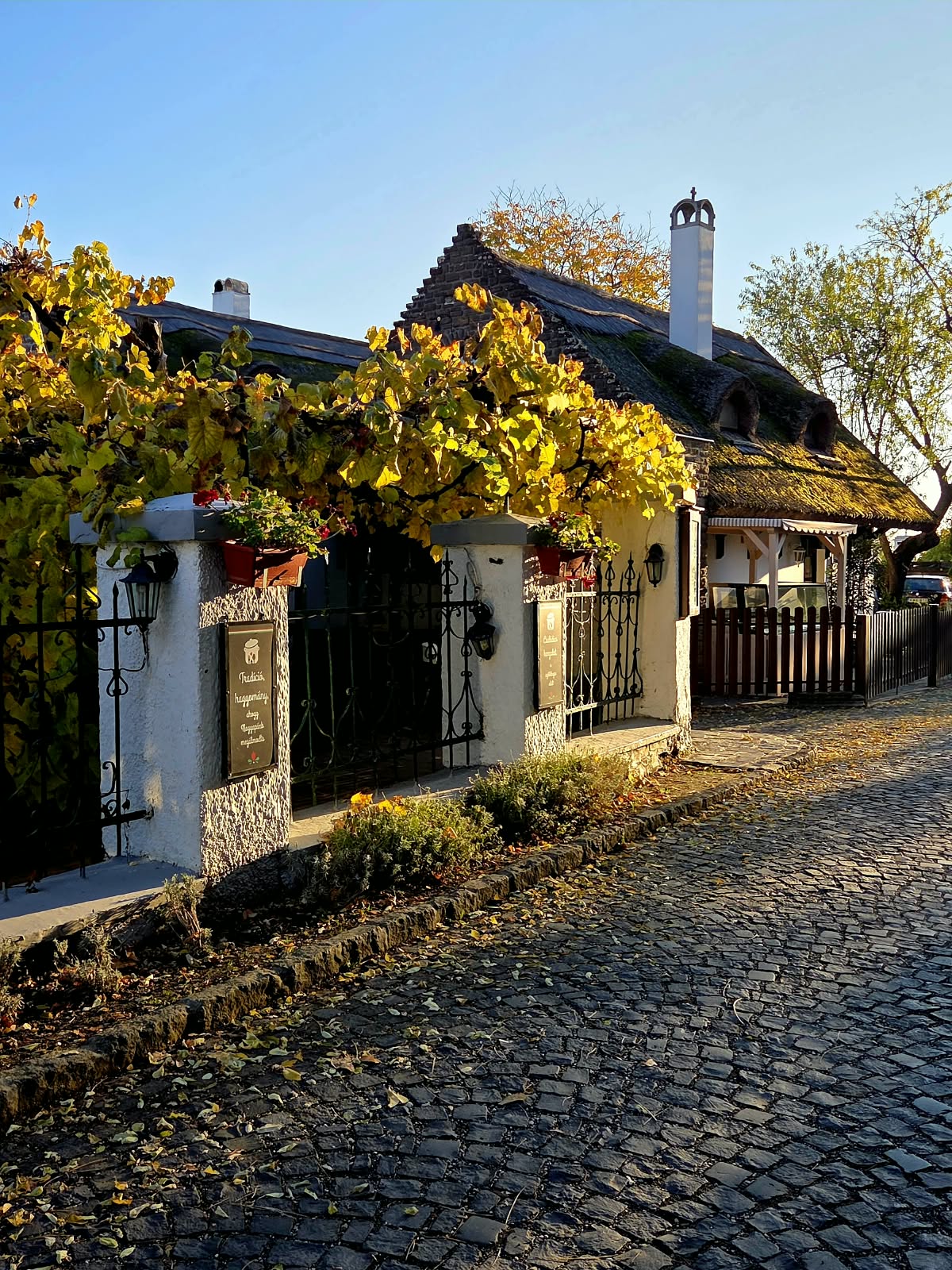
Tihany village on the Tihany Peninsula — a traditional thatched-roof peasant house and cobbled street reflecting the historic character of the Balaton Uplands.
Villages, Churches and Living Heritage
The Balaton region is also a journey through Hungary’s architectural and cultural heritage. Small settlements preserve traditional houses, cobbled streets, churches and carefully maintained historic buildings. Their scale creates a very different experience from the grand boulevards of Budapest: here, heritage is encountered at walking pace.
Church towers are particularly important landmarks in the landscape. Rising above trees and village roofs, they provide visual references for travelers moving through the hills. Some viewpoints reveal the buildings from a distance, while others bring visitors into intimate courtyards and gardens where centuries-old architecture meets everyday life.
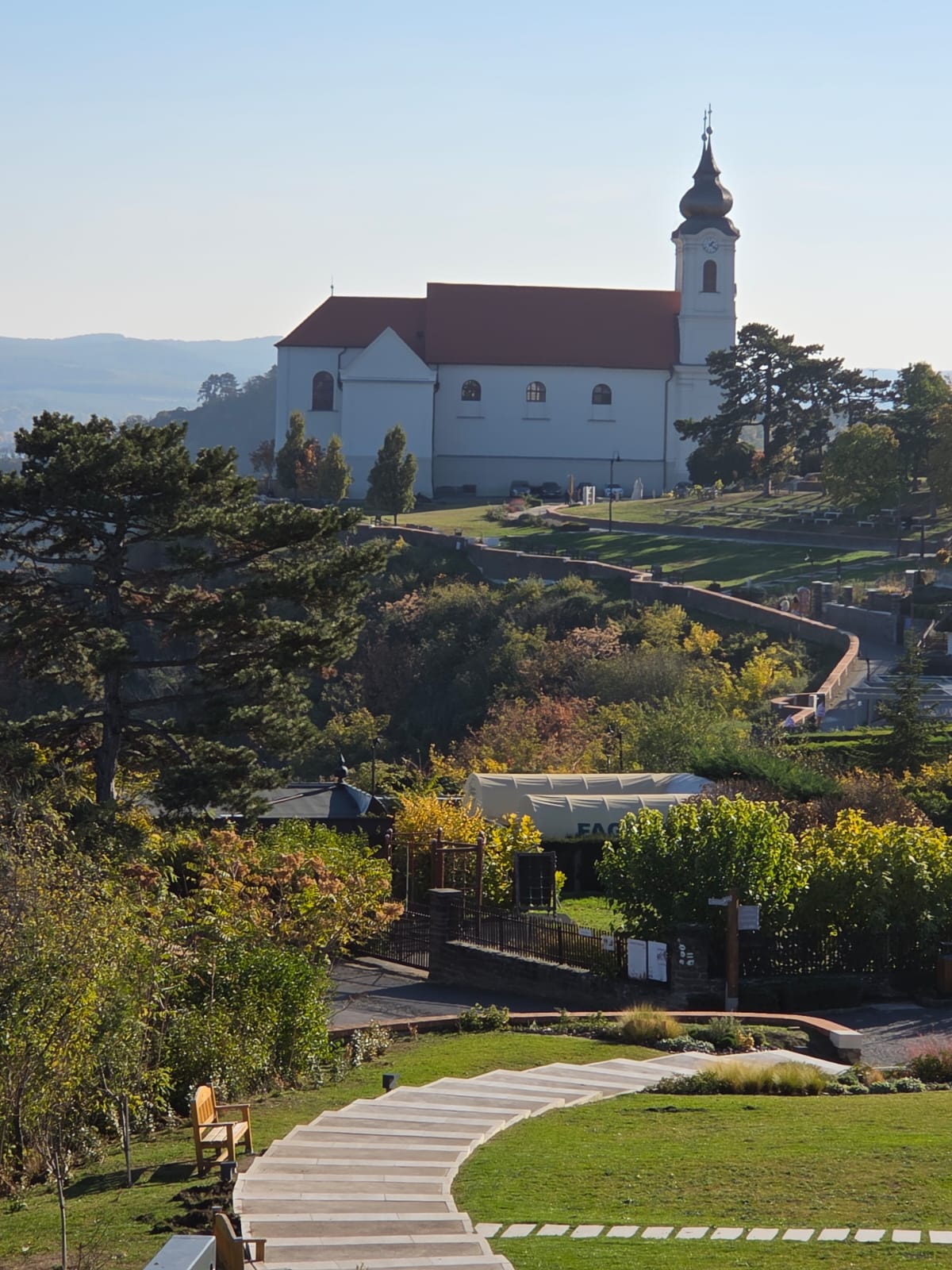
Tihany Abbey Church — the historic Benedictine church rising above the wooded Tihany Peninsula and the landscape of Lake Balaton.
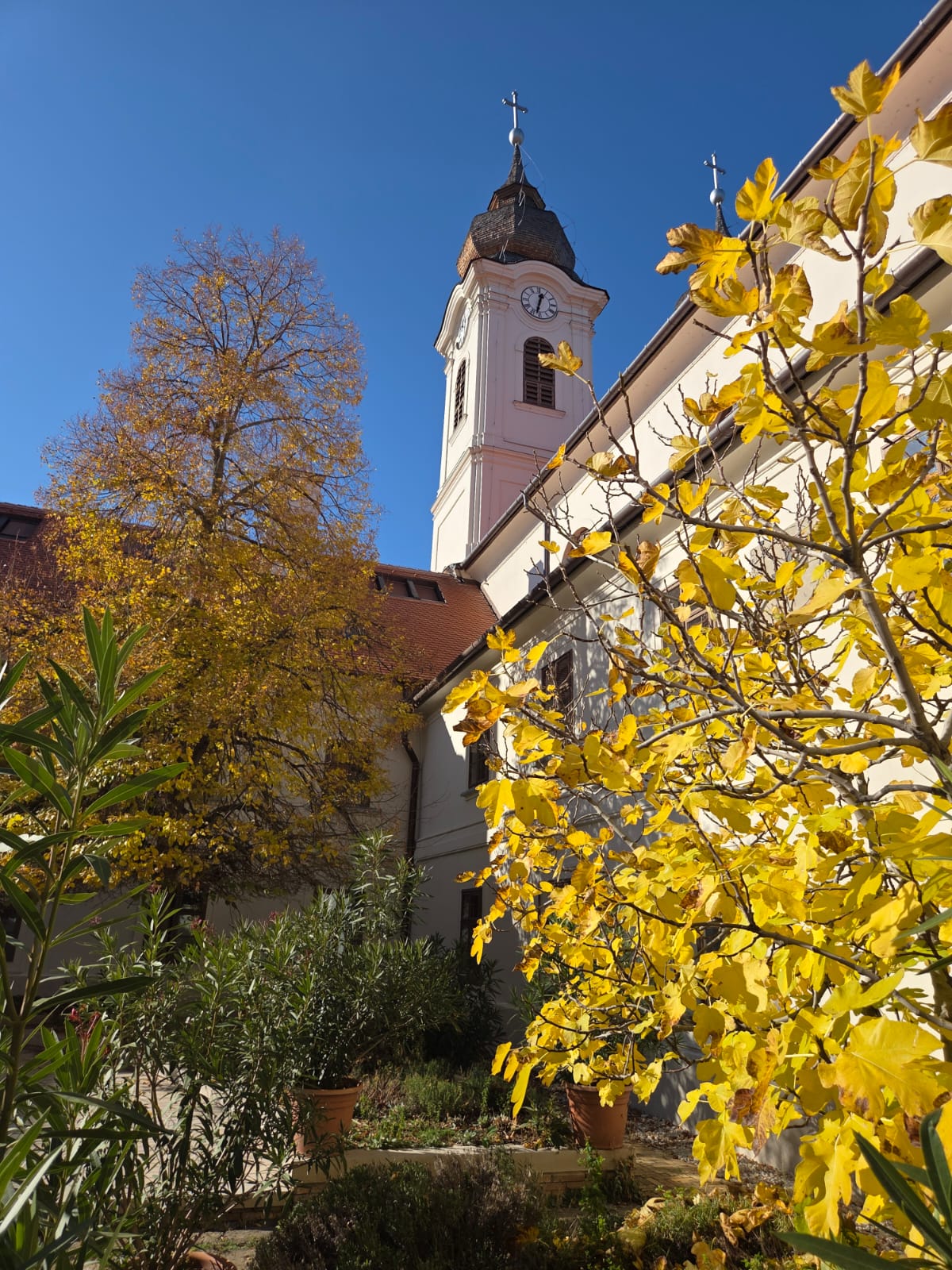
Tihany Abbey Church — a closer view of the Baroque tower, clock and onion-shaped dome framed by the golden autumn foliage of Tihany.
Wine Country by the Lake
Wine is one of the strongest identities of the Balaton region. The hills surrounding the lake provide a setting for vineyards and wineries, and wine tourism has become an important part of the destination’s appeal. A visit can be as simple as sitting down for a tasting, learning about local varieties and producers, or enjoying a glass while looking across the landscape.
The wine experience also connects naturally with food and hospitality. Rather than treating wine as an isolated attraction, the region can be experienced through a slower sequence of tastes, conversations and views. A vineyard visit becomes part of a broader journey through local culture.
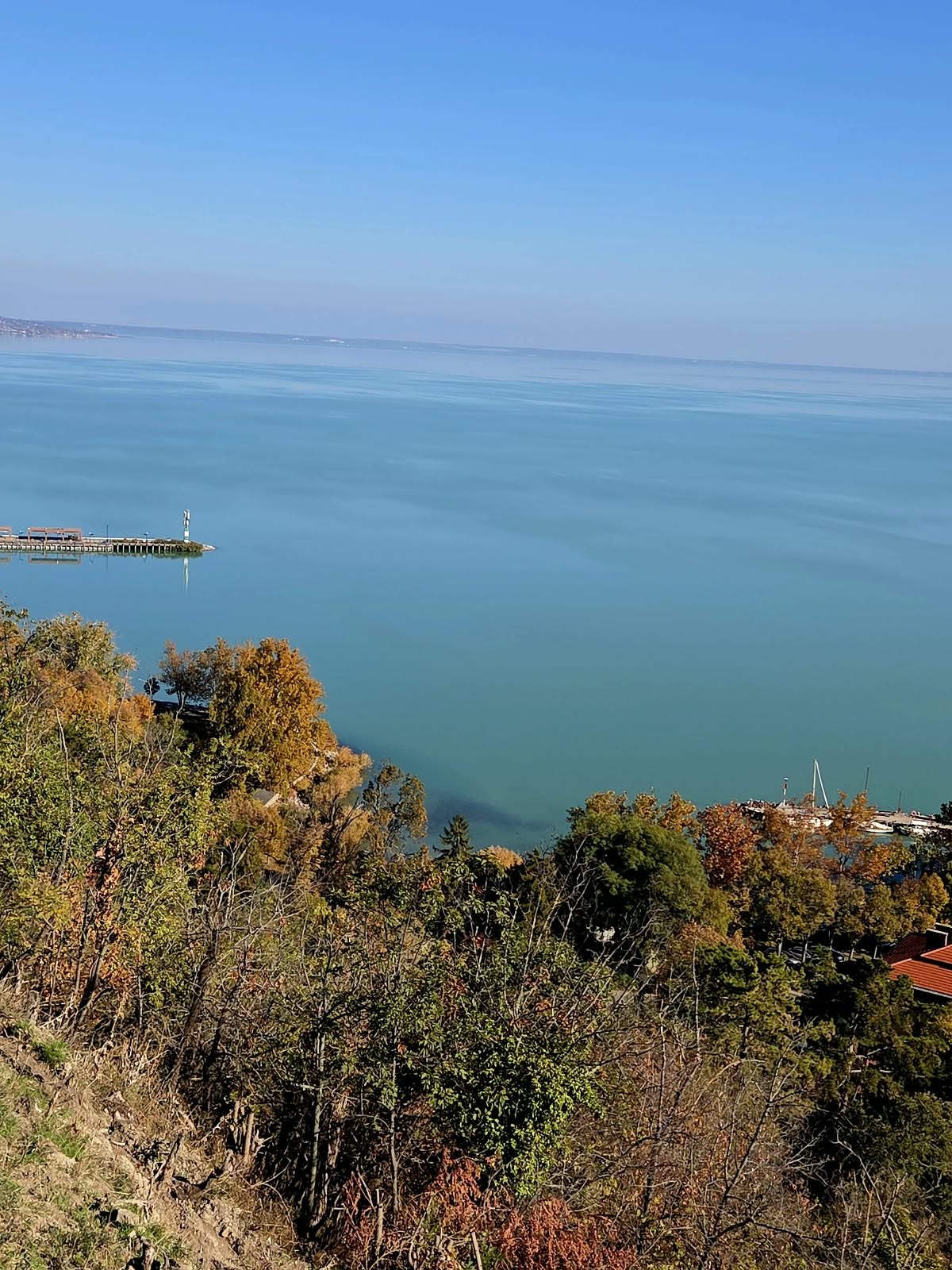
Panorama from Tihany over Lake Balaton — the turquoise water, lakeside harbour and distant shoreline seen from the elevated Tihany Peninsula.
Lavender and the Spirit of Tihany
Lavender has become another distinctive symbol of the Balaton area, particularly around Tihany. The plant’s presence adds colour and fragrance to the landscape and has developed into a tourism experience of its own, with lavender products, gardens and seasonal attractions complementing the region’s older traditions.
What makes lavender especially interesting here is the way it fits into the existing character of the destination. It is not simply an isolated attraction. Lavender, vineyards, historic villages, churches and the lake can all be experienced within the same regional journey, giving visitors several reasons to stay longer and explore beyond the shoreline.
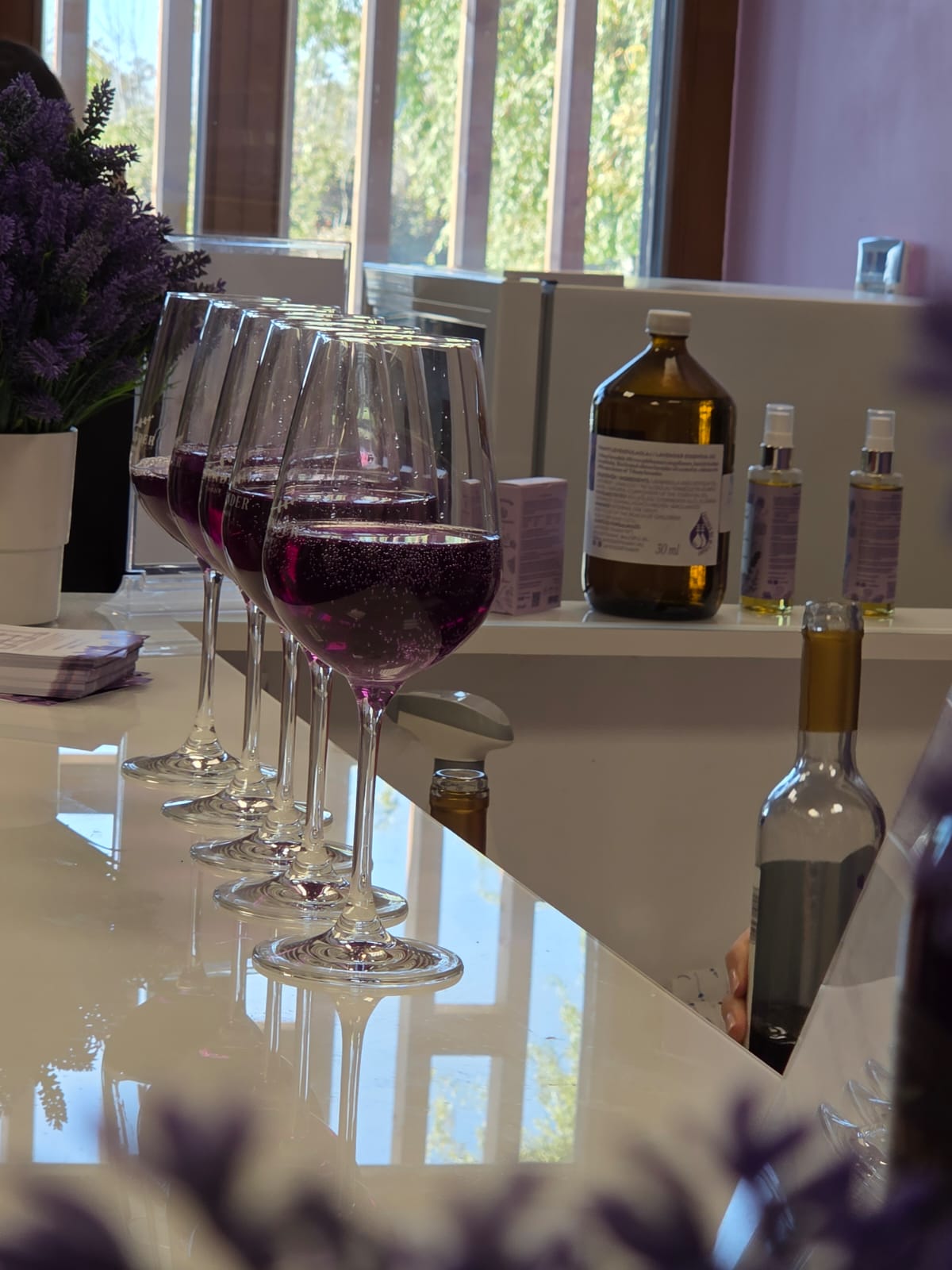
Wine tasting in the Lake Balaton wine region — a selection of Hungarian wines prepared for tasting, reflecting the region’s strong wine culture.
From Quiet Nature to Elegant Heritage
The photographs also reveal another side of the Balaton experience: elegance. Historic interiors, chandeliers, formal dining rooms, antiques and carefully arranged flowers suggest the region’s connection with aristocratic and Central European traditions. These spaces create a contrast with the simplicity of the lake and countryside, yet both belong to the same travel story.
This combination is valuable for destination tourism. A visitor can spend the morning beside the water, explore a historic settlement in the afternoon, taste local wine later in the day and finish with an elegant cultural or culinary experience. Balaton therefore works not only as a summer lake destination but as a multi-layered cultural region.
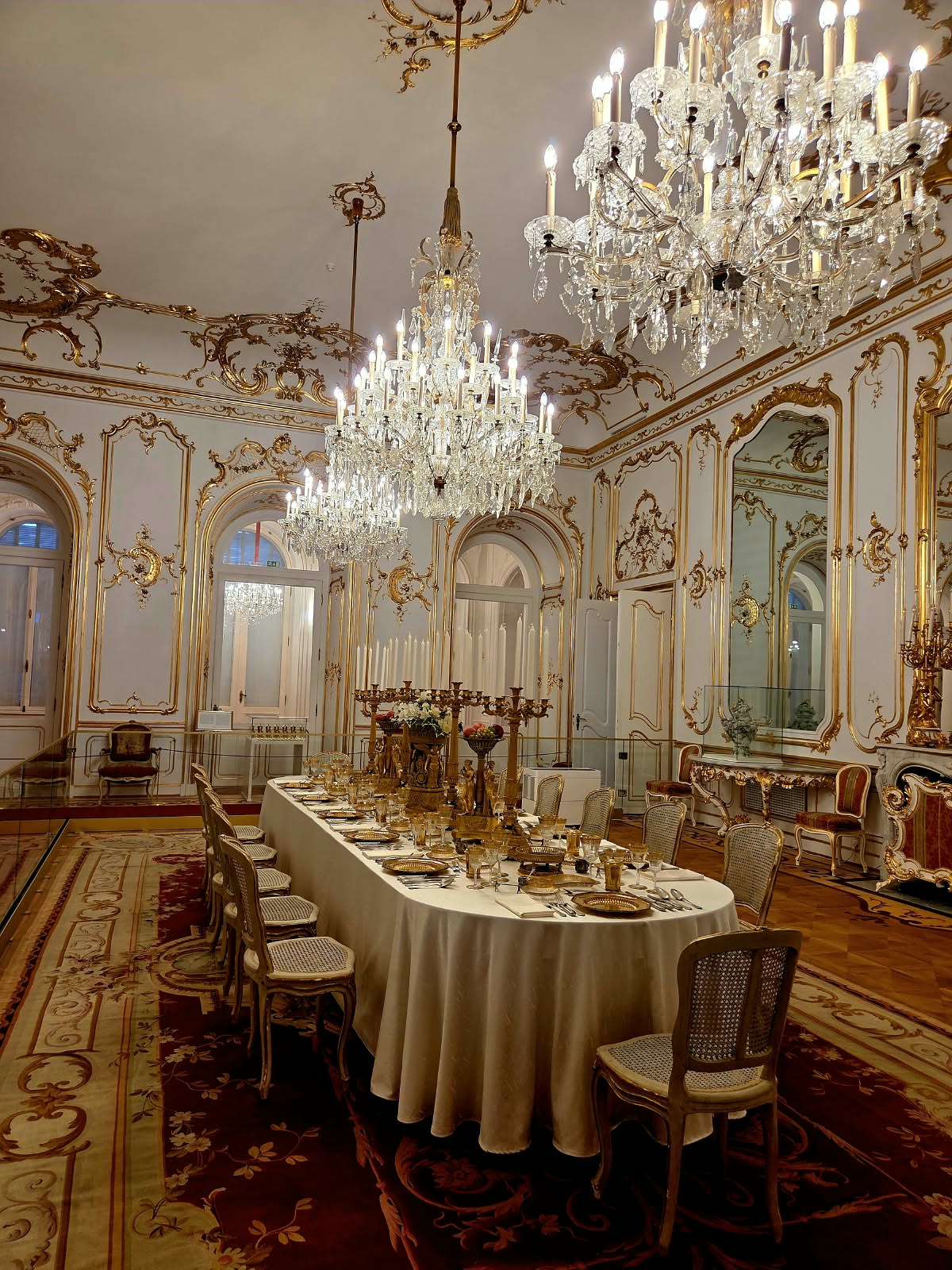
Festetics Palace, Keszthely — the grand historic dining room with crystal chandeliers, gilded Rococo decoration and a formally laid table.
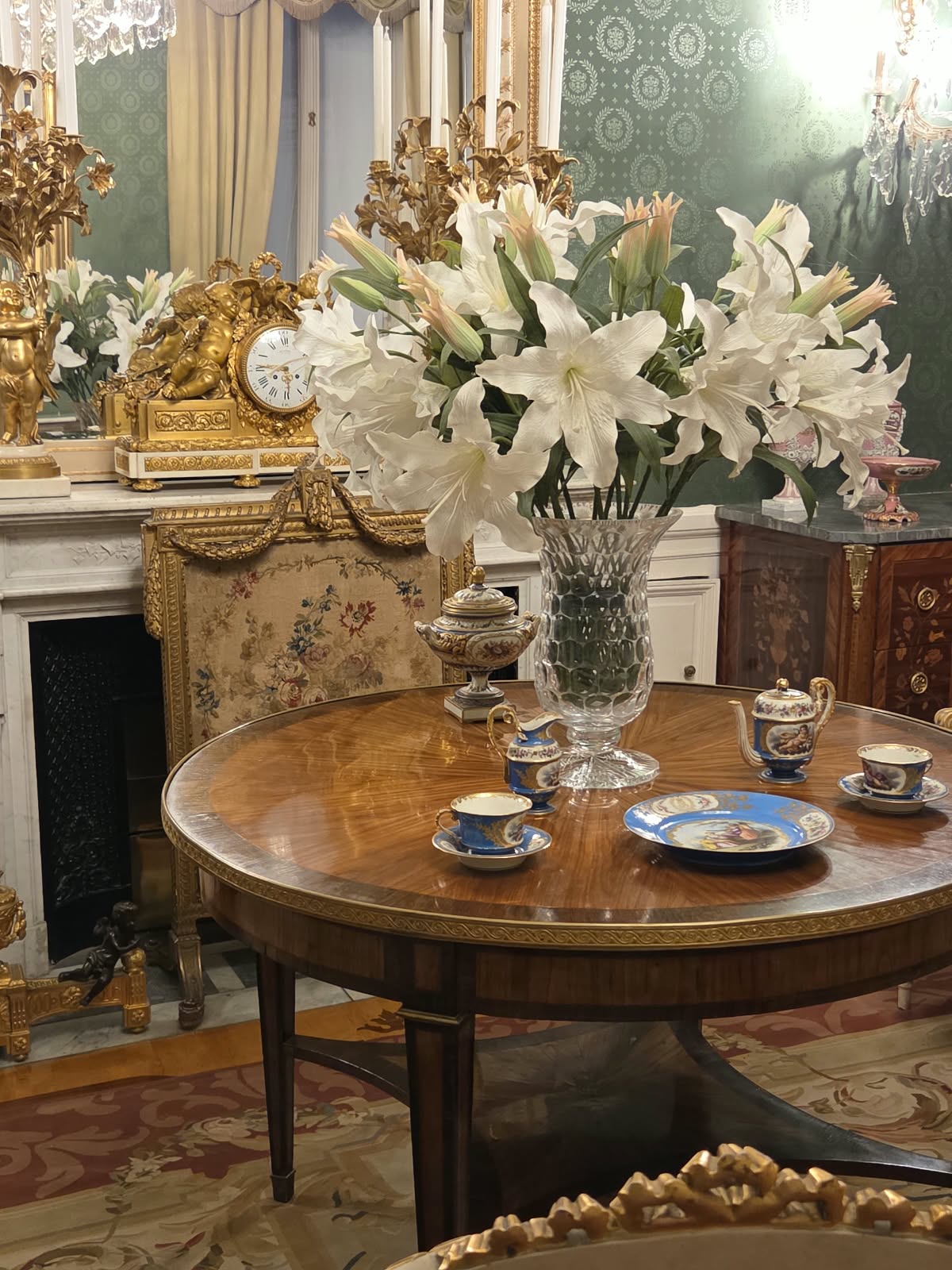
Festetics Palace, Keszthely — an elegant aristocratic salon with antique furniture, a gilded clock, porcelain and fresh white lilies.
A Destination for Slow Travel
Perhaps the greatest strength of Lake Balaton is that it does not need to compete through a single spectacular attraction. Its appeal is cumulative. The lake, the hills, vineyards, lavender, villages, churches, historic houses, food and hospitality gradually create a sense of place.
For international travelers, this makes Balaton particularly suited to slow travel. Instead of asking how many attractions can be visited in one day, the better question is how deeply the region can be experienced. A walk beneath autumn trees, a quiet sunset over the water, a glass of local wine or a conversation in a small village can become the memories that define the journey.
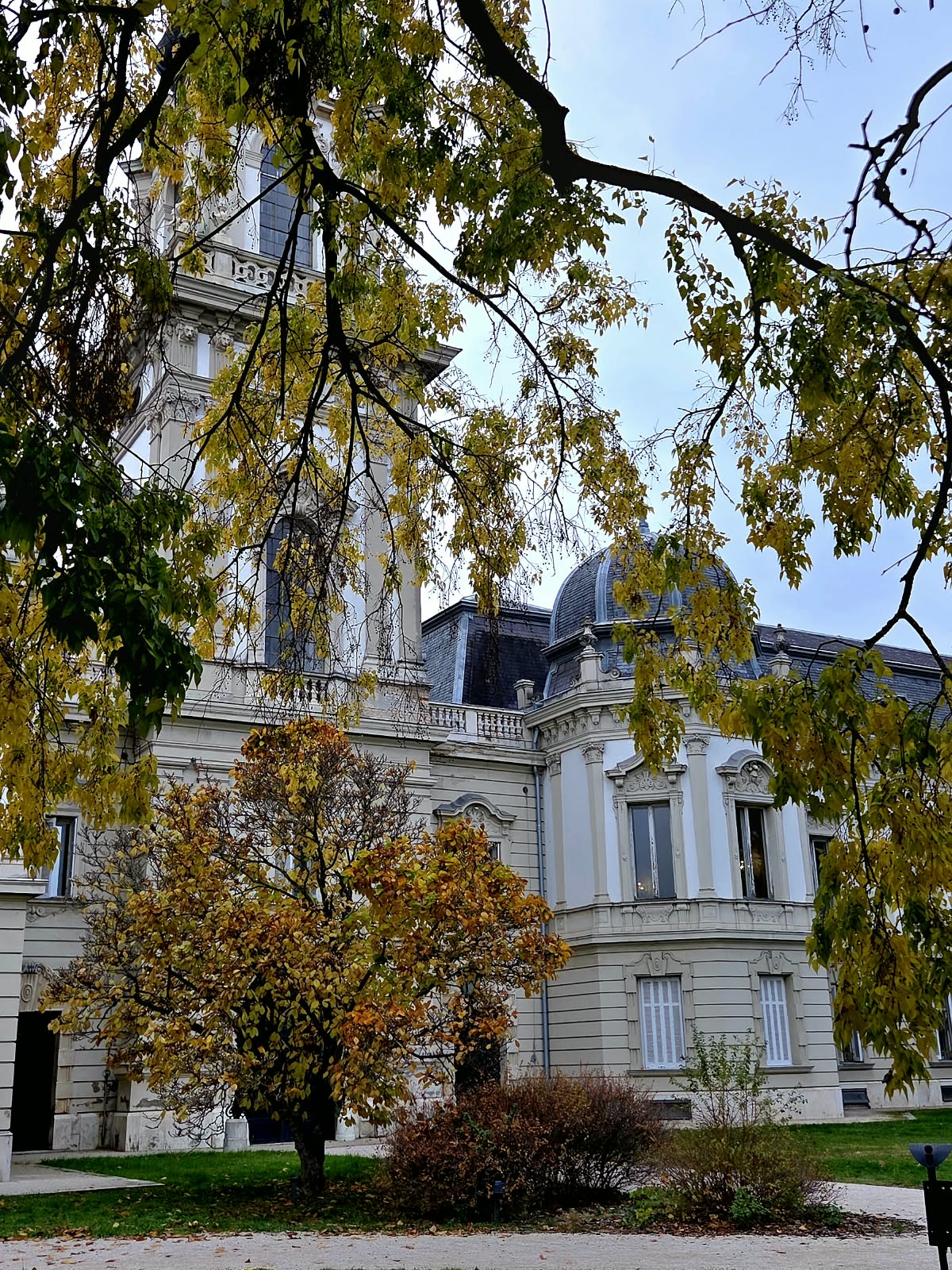
Festetics Palace, Keszthely — the Neo-Baroque palace viewed through the autumn trees of its historic park.
Beyond the Summer Lake
Lake Balaton is often associated with summer holidays, swimming and waterside leisure, but the region deserves a broader interpretation. Its cultural landscape remains attractive when the crowds of high season have gone. Autumn colours, clear skies, historic architecture and the changing light over the lake reveal a more contemplative destination.
For Hungary, Balaton represents an opportunity to connect nature-based tourism with wine, culture, wellness, heritage and gastronomy. For visitors, it offers something equally important: a chance to slow down and experience a European lake region not merely as a place to visit, but as a place to linger.
Photos by : Roma Przyluska – Polandia