
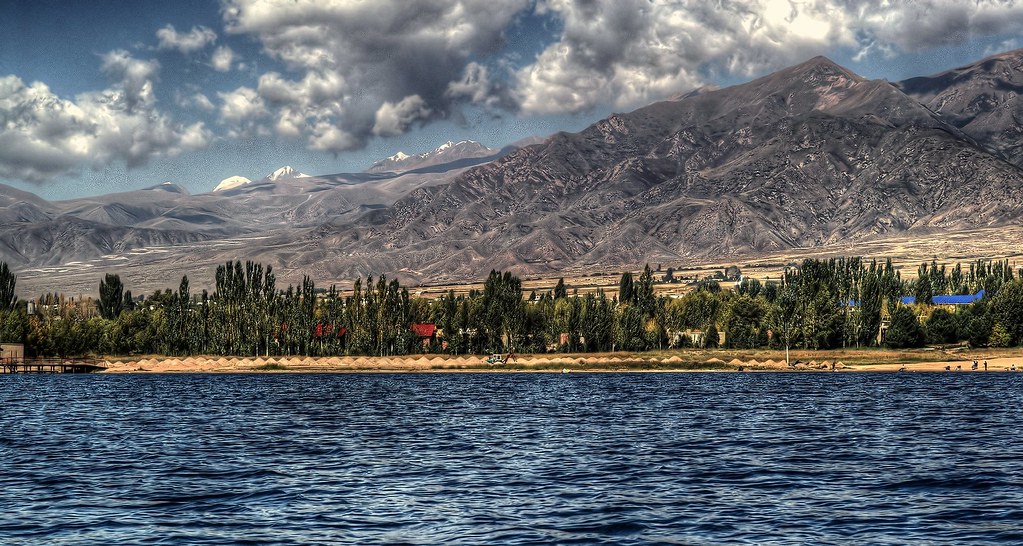
(Business Lounge – Travel) Kazakhstan is a country that challenges almost every expectation about travel. Stretching across the heart of Central Asia, it combines vast open steppes, snow-covered mountains, ancient Silk Road cities, Soviet-era legacies, and futuristic urban landscapes in a way few destinations can match. It is a place where centuries-old nomadic traditions coexist with ambitious modern development, creating a travel experience that feels both timeless and surprisingly contemporary.
For travelers accustomed to the familiar attractions of Europe or Southeast Asia, Kazakhstan offers something different. Its landscapes are immense, its history is layered, and its cultural identity reflects centuries of movement, trade, and interaction between civilizations. From the lively streets of Almaty to the monumental architecture of Astana, from turquoise mountain lakes to extraordinary desert canyons, Kazakhstan reveals a world that remains relatively unexplored by many international visitors.
A Country Defined by Extraordinary Scale
Kazakhstan is the world’s largest landlocked country and the ninth-largest country by total area, covering approximately 2.7 million square kilometers. Its territory stretches across enormous grasslands, mountain ranges, deserts, and the shores of the Caspian Sea. Despite having no direct access to the open ocean, the country possesses a remarkable diversity of landscapes that can make traveling across it feel like moving between entirely different worlds.
The Kazakh steppe is central to this geographical identity. These seemingly endless grasslands have shaped the country’s history, economy, and cultural traditions for centuries. Long before modern borders were established, nomadic communities moved across these open spaces with their livestock, developing ways of life adapted to seasonal changes and the demands of a vast environment.
The relationship between people, horses, and the landscape remains an important part of Kazakhstan’s national identity. Traditional yurts, portable dwellings designed for nomadic life, continue to symbolize this heritage. The country’s ancient connection with horse domestication is also associated with the Botai culture, whose archaeological remains provide important evidence of early human interactions with horses.
Yet Kazakhstan is not simply a land of grasslands. The Tian Shan mountain system rises dramatically in the southeast, creating a spectacular backdrop for Almaty and offering opportunities for hiking, skiing, and mountaineering. To the west, the Caspian Sea forms another distinctive part of the country’s geography, while deserts and unusual rock formations demonstrate the extraordinary variety of its natural environment.
Almaty, Where Urban Energy Meets the Mountains
Almaty is one of the most compelling starting points for discovering Kazakhstan. Although it is no longer the national capital, it remains the country’s largest city and an important center of commerce, culture, and urban life. Its location near the Tian Shan mountains gives it a distinctive character, combining metropolitan energy with immediate access to dramatic natural scenery.
The city’s streets, cafés, museums, and markets offer an introduction to contemporary Kazakhstan. Modern buildings stand alongside Soviet-era architecture, while local traditions remain visible in its food, public spaces, and everyday life. On clear days, snow-covered mountain peaks rise above the urban skyline, creating a striking contrast between the city and its natural surroundings.
One of the city’s best-known landmarks is Kok Tobe, a hill overlooking Almaty that offers panoramic views of the surrounding landscape. Visitors can reach the area by cable car, enjoying a gradual ascent above the city before exploring its viewpoints and recreational attractions. The hill provides a useful perspective on Almaty’s distinctive geography, where urban development meets the foothills of a major mountain range.
Nearby, the Medeu skating rink and Shymbulak ski resort demonstrate how closely outdoor recreation is connected to city life. Medeu sits high in the mountains, while Shymbulak attracts skiers and snowboarders with its alpine scenery and varied slopes. These destinations make Almaty particularly attractive to travelers who want to combine cultural exploration with outdoor adventure.
The city’s historical landmarks also deserve attention. Panfilov Park provides a peaceful setting for a visit to the Zenkov Cathedral, a striking wooden church completed in the early twentieth century. The Green Bazaar, meanwhile, offers a more everyday encounter with local culture, bringing together fresh produce, traditional ingredients, and regional specialties.
Food is an essential part of the experience. Beshbarmak, a traditional dish of boiled meat served with noodles, reflects the country’s nomadic culinary heritage. Kazy, a traditional horse-meat sausage, is another important specialty. Together, these dishes reveal how Kazakhstan’s food culture has developed in close relationship with pastoral life and long-standing traditions of hospitality.
Lakes and Mountains That Look Almost Unreal
Beyond Almaty, the surrounding region opens into a remarkable collection of mountain lakes, forests, waterfalls, and alpine valleys. These landscapes provide some of the country’s most memorable travel experiences, particularly for visitors seeking places where natural beauty remains the main attraction.
Big Almaty Lake is among the most recognizable destinations. Located high in the mountains, its turquoise waters are framed by steep slopes and rugged peaks. The lake’s appearance changes with the seasons and the surrounding light, creating an atmosphere that feels far removed from the busy streets of the city.
Lake Issyk offers a different experience. Situated east of Almaty, it is surrounded by forests and mountains and carries a history shaped by geological events. A devastating flood in 1963 transformed the area, making the lake an example of the powerful forces that continue to shape Kazakhstan’s landscapes.
Kaindy Lake is perhaps even more unusual. Formed following an earthquake in 1911, it is famous for its submerged forest, where pale tree trunks rise from the water like the remains of an underwater woodland. The combination of clear water, submerged spruce trees, and surrounding mountains creates a scene unlike most conventional lake destinations.
The Kolsai Lakes, another highlight of southeastern Kazakhstan, offer opportunities for hiking, horseback riding, and enjoying the mountain environment. Their forested slopes and open meadows make them especially appealing to travelers who prefer quieter encounters with nature.
Waterfalls add another dimension to the region. Burkhan Bulak, described as Kazakhstan’s tallest waterfall, is located in the Zhetysu Alatau mountains. Reaching remote natural attractions can require careful planning, but that sense of distance is also part of their appeal.
For travelers, the lesson is clear: Kazakhstan’s natural attractions are not limited to one famous landmark. The country offers an interconnected landscape of lakes, forests, valleys, and mountains that rewards those willing to explore beyond its major cities.
Charyn Canyon and the Architecture of Nature
About 200 kilometers east of Almaty, Charyn Canyon presents one of Kazakhstan’s most dramatic natural spectacles. Often compared with the Grand Canyon because of its colorful cliffs and deeply eroded formations, it stretches for more than 90 kilometers and reveals millions of years of geological history.
The canyon’s most famous section is the Valley of Castles, where sandstone formations resemble towers, fortresses, and ancient buildings. Wind, water, and erosion have gradually sculpted the rock into extraordinary shapes, creating a landscape that appears almost designed rather than naturally formed.
The colors become especially striking when sunlight falls across the canyon walls. Shades of red, orange, yellow, and brown emphasize the layers of rock and the scale of the surrounding valley. For photographers and outdoor enthusiasts, the changing light can be as important as the geological formations themselves.
Charyn Canyon also illustrates the importance of protecting Kazakhstan’s natural heritage. Its appeal lies not only in its visual drama but also in the long geological processes recorded in its rocks. Walking through the canyon provides a reminder that landscapes evolve over immense periods, far beyond the timescale of human history.
Nearby, Altyn-Emel National Park offers another unusual experience. One of its best-known features is the Singing Dune, a towering sand formation that can produce a deep humming sound under suitable conditions as sand grains move against one another. Local legends add a layer of mystery to this natural phenomenon.
The park’s Aktau Mountains are equally remarkable. Their pale, red, orange, and other colored layers reveal sediments associated with ancient environments. Together, these formations show how Kazakhstan’s landscapes extend well beyond the familiar image of an endless grassy steppe.
Astana, a Vision of Kazakhstan’s Future
If Almaty represents Kazakhstan’s cultural and commercial energy, Astana expresses its ambitions for the future. Located in the north of the country, the capital has developed into a striking modern city characterized by monumental architecture, broad avenues, and ambitious urban design.
Astana became the capital in 1997, marking an important chapter in Kazakhstan’s post-Soviet development. Its skyline reflects a national effort to create a distinctive administrative and economic center, using architecture to communicate ideas of renewal, progress, and international engagement.
The Bayterek Tower is one of the city’s most recognizable landmarks. Its design draws inspiration from a Kazakh legend involving the mythical bird Samruk and a golden egg placed in the Tree of Life. Rising above the surrounding buildings, the tower has become a symbol of the capital and the country’s aspirations.
Another major attraction is Khan Shatyr, an enormous tent-shaped structure that combines shopping, entertainment, and leisure facilities. Its distinctive form references traditional nomadic architecture while incorporating modern engineering and commercial functions. The result is an example of how Kazakhstan draws upon its past while presenting itself as a contemporary urban society.
The Palace of Peace and Reconciliation, designed in the shape of a pyramid, represents another architectural statement. It was conceived as a venue for interfaith dialogue and cultural engagement. Nearby, the Hazrat Sultan Mosque adds a major religious and architectural landmark to the capital’s urban landscape.
Astana’s modern identity is also reflected in the Nur Alem sphere, associated with Expo 2017 and its focus on future energy. Along the Ishim River, walking paths, bridges, and public spaces offer a more relaxed way to experience the city.
The contrast between Astana and Kazakhstan’s remote natural environments is particularly revealing. In one part of the country, travelers can encounter vast open landscapes and traditional rural settlements; in another, they find an ambitious capital designed to project a modern national identity.
Ancient Cities and the Legacy of the Silk Road
Kazakhstan’s story cannot be understood through its natural landscapes alone. For centuries, the region formed part of the broader network of routes connecting China, Central Asia, the Middle East, and Europe. The Silk Road carried more than merchandise: it facilitated the movement of religious ideas, artistic traditions, technologies, and cultural influences.
Turkistan remains one of the country’s most important historical and spiritual destinations. Its central landmark is the Mausoleum of Khoja Ahmed Yasawi, a UNESCO World Heritage Site associated with the fourteenth-century Timurid period. The monument honors Yasawi, a Sufi teacher and poet whose influence extended across Central Asia.
The mausoleum’s immense turquoise dome, intricate tilework, and monumental proportions make it one of the most significant examples of Islamic architecture in the region. Its unfinished state, following the death of Timur in 1405, adds another dimension to its historical significance.
Turkistan continues to attract pilgrims and visitors interested in the region’s spiritual traditions. Its historical importance reflects the way religious centers, commercial routes, and political power once intersected across Central Asia.
Elsewhere, the ruins of Otrar recall the medieval trading settlements that flourished along regional routes before the Mongol conquests. Tamgaly, known for its extensive collection of ancient petroglyphs, offers a different window into the past through rock carvings that include images dating back to the Bronze Age.
These sites help establish a deeper connection between Kazakhstan’s present and its historical role as a meeting point of civilizations. The country was never simply an empty expanse between more famous destinations. Its communities, cities, and trade routes played important roles in the wider history of Eurasia.
Nomadic Traditions in a Modern Society
Kazakhstan’s cultural identity is also shaped by traditions that remain meaningful in contemporary life. The yurt, for example, represents much more than a portable dwelling. Its structure reflects generations of practical knowledge about mobility, climate, materials, and family life on the steppe.
Traditional eagle hunting offers another example of this relationship between culture and nature. In parts of the Altai region, skilled hunters train golden eagles to participate in a practice passed down through generations. Today, the tradition attracts cultural interest and is increasingly associated with efforts to preserve heritage and broaden participation.
Kazakhstan is also a multicultural society shaped by its complex history. Kazakhs, Russians, Ukrainians, Germans, and many other communities contribute to the country’s diverse social landscape. This cultural complexity reflects migration, imperial rule, Soviet-era population movements, and the country’s development since independence in 1991.
Visitors who look beyond major monuments can encounter this diversity through local food, music, traditional crafts, markets, and everyday interactions. Such experiences often provide a more meaningful understanding of the country than a hurried sequence of sightseeing stops.
A Destination for the Next Generation of Explorers
Kazakhstan offers an unusual combination of established attractions and places that still feel remote. Travelers can spend one day exploring the architecture and restaurants of a major city, then venture into mountain valleys, desert landscapes, or remote villages where the rhythm of life is shaped by geography and tradition.
Outdoor activities are an important part of this appeal. Hiking, horseback riding, mountain biking, camping, fishing, and winter sports allow visitors to experience the country beyond its urban centers. The Ile River and the high-altitude plateaus near Almaty offer additional opportunities for exploration, although access to remote areas requires appropriate planning and attention to local conditions.
The country’s size, however, is also a practical consideration. Distances between destinations can be substantial, and journeys that look short on a map may require considerable travel time. A well-designed itinerary should account for transport, seasonal weather, road conditions, and the facilities available in less-developed regions.
Environmental change is another consideration. Retreating glaciers in the Tian Shan mountains illustrate the effects of a warming climate on landscapes that are important for tourism, water resources, and regional ecosystems. Responsible travel therefore means appreciating the country’s natural beauty while recognizing the need to protect it.
Ultimately, Kazakhstan’s greatest strength is its ability to surprise. It is a country of immense geographical scale, deep historical connections, striking architecture, and living traditions. Its appeal does not depend on a single famous attraction, but on the remarkable contrasts that emerge when all these elements are experienced together.
For travelers seeking a destination beyond the usual international circuit, Kazakhstan offers an invitation to see Central Asia from a new perspective. It is a place where the ancient Silk Road meets the modern skyline, where mountain lakes contrast with desert canyons, and where the enduring spirit of the steppe continues to shape a rapidly changing nation.