
From the impressive peaks of the Carpathian Mountains to the waterways of the Danube Delta, Romania offers an extraordinary variety of travel experiences. Visitors can explore elegant royal residences, walk through medieval town squares, discover remote mountain villages, and enjoy traditional cuisine shaped by generations of local customs. Beyond its famous architectural landmarks, the country reveals a quieter and more authentic side of Europe, where nature and history remain closely connected.
The Carpathian Mountains and Romania’s Remarkable Landscape
Located in southeastern Europe, north of the Balkan Peninsula, Romania covers approximately 238,397 square kilometers, making it one of the larger countries in Europe. Its geography is remarkably diverse, featuring rolling plains, forested plateaus, fertile agricultural land, and spectacular mountain ranges. The Carpathian Mountains dominate the central part of the country, forming a dramatic natural arc that defines much of Romania’s landscape.
The Carpathians are divided into three main sections: the Eastern Carpathians, Southern Carpathians, and Western Carpathians. Their highest peak, Moldoveanu, rises to approximately 2,544 meters above sea level. These mountains offer breathtaking scenery, including alpine meadows, glacial lakes, dense forests, and deep valleys. They are also among the most attractive destinations in the country for hiking, wildlife observation, and outdoor adventures.
One of Romania’s most spectacular mountain experiences is driving along the Transfăgărășan Highway. Winding through the Southern Carpathians, this famous road climbs through dramatic mountain scenery, passing steep cliffs, green valleys, and impressive viewpoints. During the summer months, when the road is accessible, it becomes a favorite destination for road trips, photographers, and travelers looking to experience the beauty of Romania’s highlands.
The mountains are also important for biodiversity. Romania contains extensive areas of relatively well-preserved forests that provide habitats for brown bears, wolves, and Eurasian lynx. This rich natural environment makes the country particularly appealing to visitors interested in wildlife and ecological tourism.
The Danube River and the Natural Wonder of the Black Sea
Another defining feature of Romania is the Danube River, one of Europe’s great waterways. The river flows along and through Romanian territory before reaching the Black Sea, where it creates an extraordinary network of wetlands, lakes, islands, and waterways known as the Danube Delta.
The Danube Delta is one of Europe’s most valuable natural ecosystems and a UNESCO World Heritage Site. Its landscape is characterized by winding channels, extensive reed beds, freshwater lakes, and traditional fishing settlements. The region provides habitat for hundreds of bird species, including large populations of pelicans, making it an exceptional destination for birdwatchers and nature photographers.
Exploring the delta by boat offers a completely different perspective on Romania. Visitors can travel through quiet waterways, observe wildlife, and discover small villages where traditional fishing remains an important part of everyday life. The experience reveals a quieter side of the country, far removed from the busy streets of its major cities.
The delta also highlights the importance of environmental conservation. Balancing tourism, fishing, agriculture, and the protection of fragile ecosystems remains essential to preserving this remarkable natural heritage for future generations.
Transylvania and the Splendor of Medieval Castles
Perhaps Romania’s most enchanting region is Transylvania. Surrounded by the Carpathian Mountains, this historic area is famous for its medieval fortresses, picturesque villages, Gothic architecture, and spectacular countryside. Its landscapes combine rolling green hills, dense forests, traditional farms, and historic settlements that seem to have preserved the atmosphere of another century.
One of the region’s most recognizable landmarks is Bran Castle. Perched dramatically on a rocky hill, the castle features narrow passageways, imposing towers, and historic rooms. Its architecture and spectacular location make it one of Romania’s most photographed attractions. Visitors can explore its historic interiors and enjoy panoramic views of the surrounding countryside.
Another architectural masterpiece is Peleș Castle. Built in the late 19th century as a royal residence, the castle is surrounded by forested mountain scenery and is widely admired for its Neo-Renaissance architecture. Its richly decorated interiors feature carved woodwork, stained glass, elaborate furniture, and impressive art collections. The building represents an important chapter in Romania’s royal history and is considered one of the most beautiful castles in Europe.
For those fascinated by medieval architecture, Corvin Castle is another essential destination. Its Gothic towers, stone bridges, fortified walls, and impressive courtyard create the impression of a castle taken directly from a medieval storybook. The structure reflects the military architecture and aristocratic traditions of medieval Transylvania.
Together, these castles demonstrate the richness of Romania’s architectural heritage and offer visitors an opportunity to explore the country’s history through some of its most impressive surviving monuments.
Historic Cities That Preserve Europe’s Medieval Charm
Romania’s appeal extends well beyond its castles. Across the country, historic cities preserve distinctive architectural styles, cultural traditions, and urban landscapes shaped by centuries of European history.
The capital, Bucharest, is the country’s political, economic, and cultural center. Often described as a city of contrasts, Bucharest combines grand historic buildings, wide boulevards, modern business districts, and lively entertainment areas. One of its most recognizable landmarks is the Palace of the Parliament, an enormous building constructed during the communist era under Nicolae Ceaușescu. Its monumental scale makes it one of the largest administrative buildings in the world.
Bucharest also has a charming historic district known as Lipscani. Its narrow streets, restored buildings, cafés, restaurants, and cultural venues provide an inviting atmosphere for visitors who want to explore the city’s everyday life. Here, the country’s historical identity meets a modern urban lifestyle.
Further north, Brașov offers a different experience. Surrounded by mountains, the city is known for its beautifully preserved medieval center. Council Square is lined with colorful historic buildings, while the imposing Black Church stands as one of the most important Gothic monuments in the region. The combination of mountain scenery, historic streets, and traditional architecture makes Brașov one of Romania’s most attractive destinations.
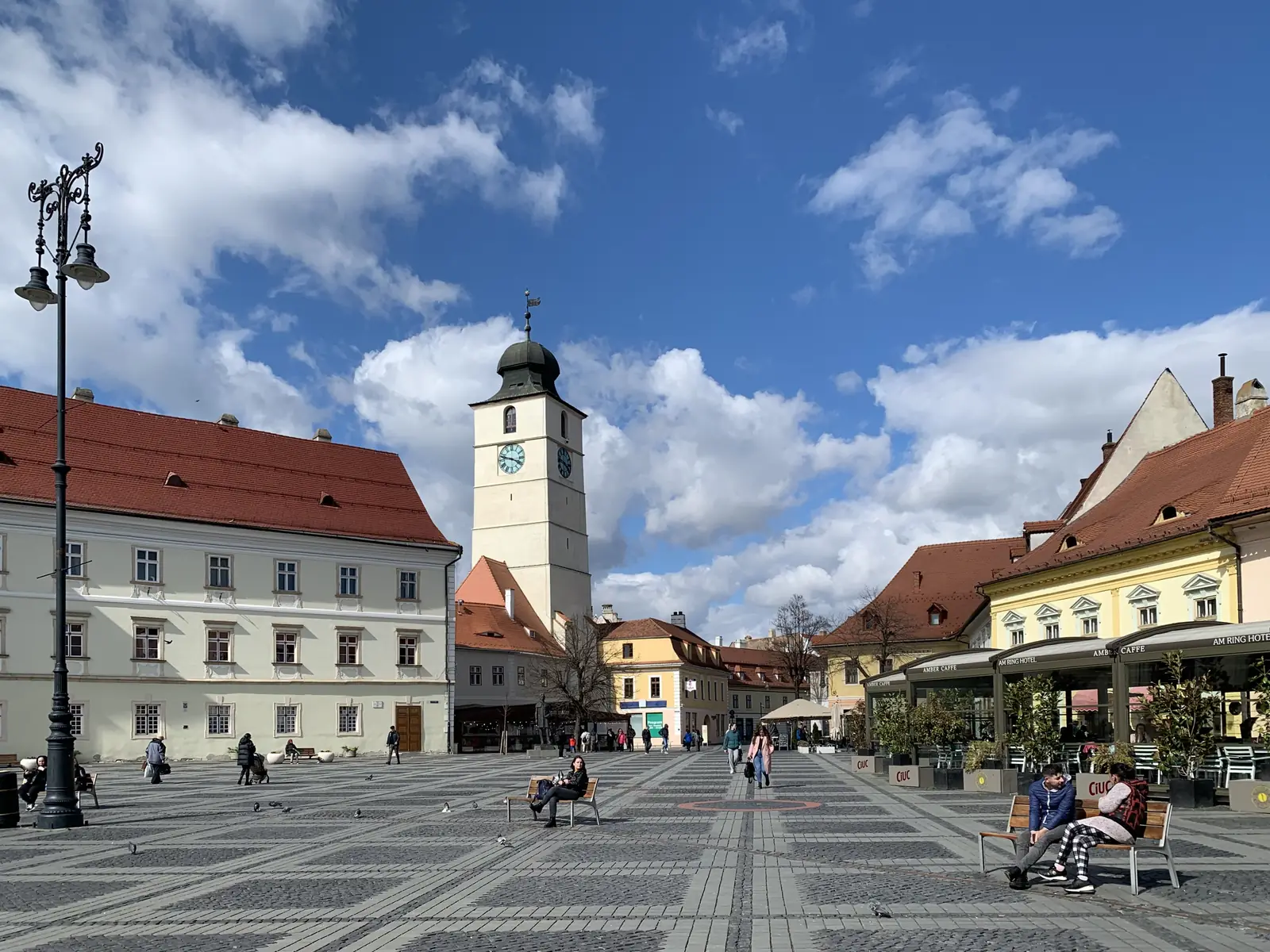
Another remarkable city is Sibiu. Its historic center is famous for pastel-colored buildings, cobbled streets, and distinctive rooftop windows that resemble watching eyes. The city reflects strong Saxon influences and offers museums, churches, traditional restaurants, and cultural festivals throughout the year.
Meanwhile, Sighișoara is among the best-preserved inhabited medieval citadels in Europe. Its colorful houses, defensive towers, narrow streets, and historic squares create an extraordinary atmosphere. Walking through its old town is like stepping into a living museum of medieval European architecture.
Romanian Cuisine, A Blend of European Traditions
Food is another important part of the Romanian travel experience. The country’s traditional cuisine reflects centuries of cultural interaction, incorporating influences from neighboring Central European countries, Ottoman traditions, and local agricultural practices. Pork, vegetables, corn, dairy products, and grains are common ingredients in many traditional dishes.
One of the most popular dishes is sarmale, cabbage or vine leaves filled with minced meat and rice. Slowly cooked in a rich sauce, these flavorful rolls are often served with sour cream and mămăligă, a traditional cornmeal dish similar to polenta. Mămăligă is a versatile staple that can accompany meat stews, cheese, butter, or other traditional foods.
Another distinctive Romanian specialty is ciorbă de burtă, a hearty tripe soup prepared with beef stomach, vinegar, garlic, dill, and sour cream. Its characteristic combination of tangy and creamy flavors makes it one of the country’s most recognizable comfort foods.
Travelers should also try mici, small grilled rolls of minced meat traditionally prepared using a combination of beef, pork, and lamb. Seasoned with garlic, black pepper, and herbs, they are commonly served with mustard, bread, or French fries. Mici can be found in traditional restaurants, outdoor markets, and casual food stalls throughout the country.
These dishes offer more than just a taste of Romanian cooking. They reveal how geography, agriculture, and cultural exchanges have shaped the country’s culinary identity.
From the Roman Empire to Modern Romania
Romania’s history stretches back more than two thousand years. Before the arrival of the Romans, the region was inhabited by the Dacians, an ancient people whose kingdom occupied much of present-day Romania.
In 106 AD, the Roman Empire conquered the Dacian Kingdom under Emperor Trajan and established the province of Dacia. Roman influence profoundly shaped the development of the local population, particularly its language and cultural traditions. The Romanian language belongs to the Romance language family, sharing historical roots with Italian, French, Spanish, and Portuguese.
Following the Roman withdrawal in the third century, the region experienced successive waves of migration and political change. Goths, Huns, Avars, and Slavic peoples all influenced the historical development of the area. Over the following centuries, several political entities emerged, including Wallachia and Moldavia, which eventually became the foundations of the modern Romanian state.
A major turning point came in 1859, when Wallachia and Moldavia united under Alexandru Ioan Cuza. Romania subsequently declared independence from Ottoman control in 1877, with international recognition following the Russo-Turkish War. In 1918, Transylvania joined Romania after the collapse of Austria-Hungary at the end of World War I, marking a defining moment in the country’s national history.
However, the 20th century brought another dramatic transformation. After World War II, Romania came under communist rule and developed into an authoritarian state. Nicolae Ceaușescu governed the country for more than two decades, maintaining strict political control and an extensive personality cult.
In December 1989, a popular revolution brought his government to an end. Ceaușescu and his wife were subsequently executed following a military trial. The revolution opened the way for democratic reforms and a transition toward a market-based economy.
Romania gradually strengthened its relationship with Western Europe, joining NATO in 2004 and the European Union in 2007. These developments marked a significant step in the country’s political and economic integration with the wider European community.
A Modern Economy with Growing European Connections
Today, Romania is an increasingly important economy in Eastern Europe. Since abandoning its centrally planned economic system in 1989, the country has undertaken extensive reforms, including privatization, market liberalization, and the restructuring of state-owned enterprises.
Its economy is supported by several important industries, including energy, automotive manufacturing, machinery, mining, chemicals, and agriculture. Romania also possesses diverse energy resources, including coal, oil, natural gas, hydroelectric power, and nuclear energy.
The automotive industry is particularly significant. Dacia has become one of the country’s best-known industrial brands, connecting Romanian manufacturing with the wider European automotive market.
Agriculture also remains an important part of the national economy. Romania has extensive farmland suitable for growing food crops, raising livestock, and producing wine. Its rural landscapes contain vineyards, traditional farms, and agricultural communities that contribute to both domestic food production and regional exports.
Despite its progress, the country continues to face structural challenges. Infrastructure gaps, administrative inefficiencies, corruption concerns, and regional economic inequality remain important issues. The differences between major urban centers and rural communities are particularly noticeable.
Cities such as Bucharest, Cluj-Napoca, Timișoara, and Iași have developed into important centers for business, technology, education, and manufacturing. Meanwhile, many rural areas still depend heavily on agriculture and traditional economic activities.
Romania’s future growth will depend partly on its ability to connect these different regions through better infrastructure, investment, education, and business development. Its membership in the European Union provides opportunities to attract capital, expand trade, and strengthen its position within the European economy.
Sports, Traditions, and National Identity
Romanian culture is deeply connected to its language, religious traditions, folk music, and regional customs. Romanian is the official language and is spoken by the majority of the population. Hungarian and Romani are also used by minority communities, particularly in certain regions.
Eastern Orthodox Christianity is the dominant religious tradition, while Roman Catholic and Protestant communities also have a longstanding presence. Religious celebrations, historic monasteries, traditional music, and folk festivals remain important elements of Romanian cultural life.
Romania also has a strong sporting tradition. Football is the country’s most popular sport, with a history dating back to the early 20th century. The national team has participated in several FIFA World Cups, while Romanian clubs have achieved notable success in European competitions.
One of the most celebrated figures in Romanian football is Gheorghe Hagi, widely regarded as one of the greatest players in the country’s history. His performances for the national team and major European clubs made him a symbol of Romanian sporting achievement.
Gymnastics is another area in which Romania has enjoyed international recognition. Nadia Comăneci became a global sporting icon at the 1976 Montreal Olympics when she achieved the first perfect 10.00 in Olympic gymnastics history. Her achievement remains one of the most memorable moments in the history of the sport.
Romania has also produced outstanding tennis players, including Simona Halep, a former world number one who won two Grand Slam singles titles. Handball, rugby, basketball, and chess also have established followings and competitive traditions.
Romania, A European Destination of Timeless Beauty
Romania offers travelers an extraordinary combination of natural beauty, history, architecture, and cultural experiences. The Carpathian Mountains provide spectacular landscapes, the Danube Delta reveals one of Europe’s richest natural environments, and Transylvania preserves some of the continent’s most fascinating medieval towns and castles.
Its cities offer another dimension of discovery. Bucharest reflects the country’s transformation into a modern European capital, while Brașov, Sibiu, and Sighișoara preserve the atmosphere of an earlier age. Traditional cuisine, rural villages, religious heritage, and local festivals further enrich the travel experience.
For travelers looking beyond the familiar destinations of Western Europe, Romania offers an appealing alternative. Its combination of historic attractions, natural landscapes, and relatively accessible travel costs makes it an interesting destination for both short visits and longer explorations.
What makes Romania particularly special is the way its past remains visible in everyday life. Ancient ruins, royal residences, medieval streets, traditional villages, and historic churches tell stories of civilizations and generations that have shaped the country. At the same time, modern cities, growing industries, and contemporary cultural life demonstrate a nation continuing to evolve.
Romania is ultimately a destination where nature, history, and tradition come together. From mountain roads and peaceful river landscapes to magnificent castles and charming medieval towns, the country offers an unforgettable journey through one of Europe’s most fascinating cultural landscapes.