
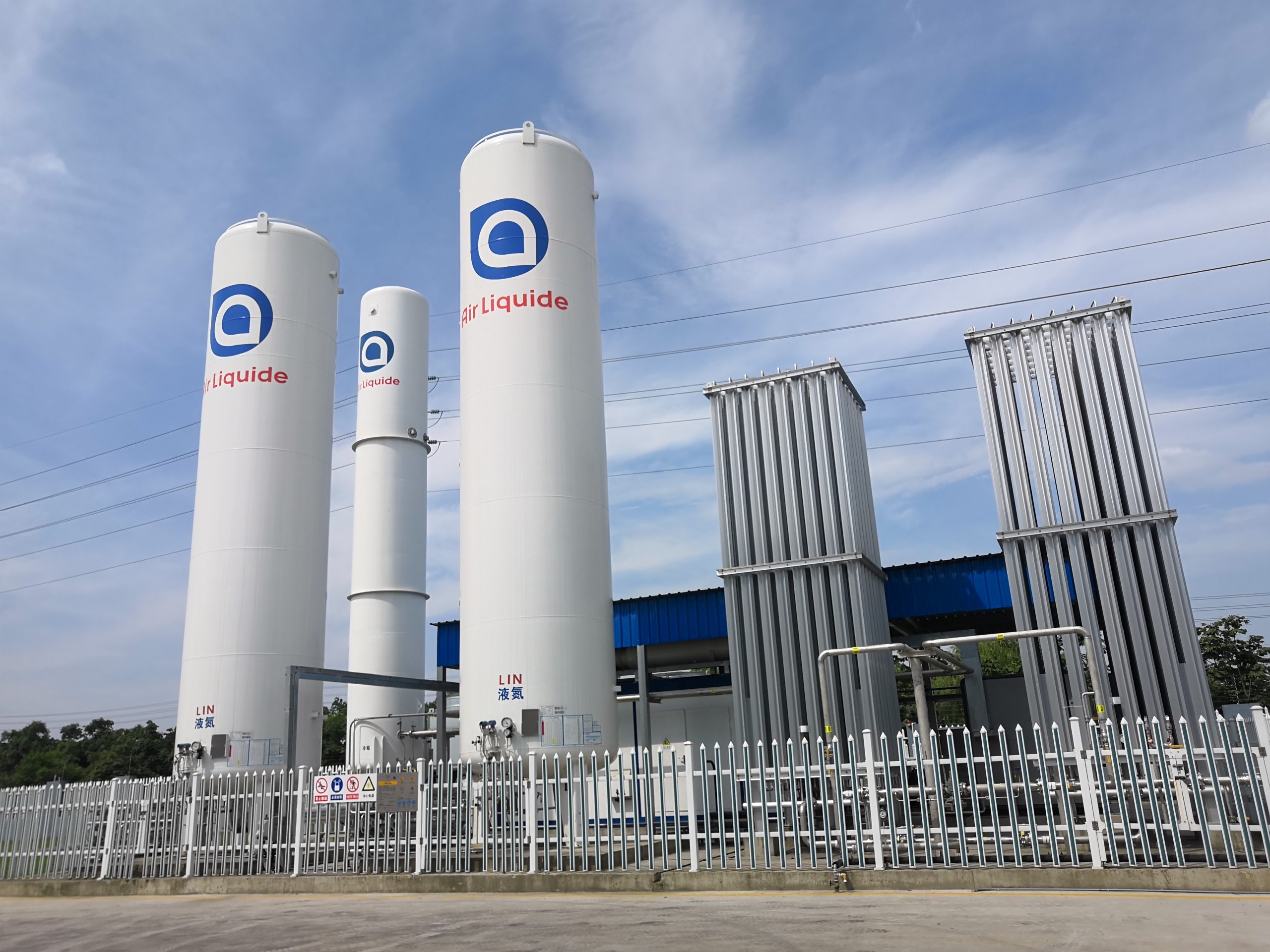
(Business Lounge – Global News) Air Liquide is entering a new strategic phase with an ambitious plan to accelerate sales, improve profitability and expand its presence in some of the industries expected to shape the global economy through the end of the decade. The French industrial-gases company has unveiled its BEYOND strategy for 2026–2030, linking growth ambitions with higher margins, larger industrial investments and a stronger focus on technology-driven markets.
The plan reflects a broader change in the role of industrial gases. Air Liquide’s products are increasingly connected to semiconductor manufacturing, artificial intelligence infrastructure, energy transition, healthcare and space activities. Rather than relying primarily on traditional industrial demand, the company is positioning itself around structural shifts that could generate new sources of long-term growth.
A New Chapter After ADVANCE
The BEYOND strategy builds on the completion of Air Liquide’s previous ADVANCE plan covering 2022–2025. The company says ADVANCE strengthened its profitability and financial foundations, providing greater flexibility to increase investment while also expanding shareholder returns. That creates a different starting point for the next strategic cycle, with management now targeting both growth and a further improvement in capital efficiency.
Air Liquide is targeting recurring earnings-per-share growth of approximately 10% a year, with a range of plus or minus two percentage points, between 2026 and 2030. It also aims to achieve recurring return on capital employed above 11% in 2030. The targets indicate that the company is not simply pursuing larger sales, but is seeking to ensure that additional growth translates into stronger profitability and returns.
The company has identified three principal financial levers behind the strategy: sales growth of approximately 5% annually, operating-margin improvement of between 400 and 600 basis points over the period, and more than €40 billion of total capital allocation through 2030. Air Liquide expects its sales growth to exceed global industrial production by roughly two to three times.
Electronics and AI Become Major Growth Engines
One of the most important elements of BEYOND is the increased emphasis on electronics and artificial intelligence. Air Liquide is already a major supplier of industrial gases and advanced materials to semiconductor manufacturers, making the expansion of chip production a direct opportunity for the company. The global push for larger fabrication facilities and greater technological sovereignty is creating demand for increasingly sophisticated materials and gases.
The connection with AI is particularly significant because the rapid expansion of artificial intelligence requires enormous investments in computing infrastructure. Advanced chips, data centers and semiconductor fabrication facilities all depend on highly specialized industrial processes, creating opportunities for suppliers positioned deep within the manufacturing ecosystem. Air Liquide is therefore participating in the AI economy indirectly, through the physical infrastructure required to produce the technology.
The company expects its electronics business to benefit from growth in semiconductor manufacturing across major regions. Its strategy calls for stronger positioning in Asia’s semiconductor industry, while in the Americas it is targeting electronics, data centers, infrastructure and space. This geographic approach reflects an effort to align investment with the locations where industrial capacity is expanding fastest.
Energy Transition Remains Central
The energy transition represents another major pillar of the strategy. Air Liquide sees long-term demand for its technologies and industrial gases as economies attempt to reduce emissions while maintaining industrial competitiveness. Hydrogen, carbon-management technologies and other specialized industrial solutions remain important parts of the company’s technology portfolio.
The opportunity is not limited to selling individual products. Air Liquide is increasingly involved in large industrial projects supported by long-term contracts, allowing the company to build infrastructure around customers’ energy and production requirements. Under BEYOND, the company expects to make approximately €24 billion of industrial investment decisions between 2026 and 2030, with a focus on targeted projects and major industrial basins.
That investment program represents a significant commitment at a time when industrial companies face uncertainty over energy costs, supply chains and the pace of decarbonization. Air Liquide’s approach is to concentrate capital where it sees long-term demand visibility, particularly projects supported by contracts that can provide greater predictability over future cash flows.
Healthcare Adds Another Layer of Growth
Healthcare is another strategic market identified under BEYOND. Air Liquide already has a substantial presence in home healthcare, and the company intends to use technology and artificial intelligence to improve patient care while developing additional services. This gives the healthcare business a different growth profile from the company’s industrial activities.
The combination of healthcare expertise and digital technology could allow Air Liquide to move further into services rather than relying exclusively on traditional medical gases. Artificial intelligence can potentially support monitoring, personalization and operational efficiency, while the company’s existing relationships with patients and healthcare providers provide a foundation for developing new offerings.
Space is also being added to the strategic growth equation. Air Liquide plans to use its expertise in gases, cryogenics and related technologies to capture opportunities from the expansion of the private space industry. As launch activity and space infrastructure develop, specialized gases and extreme-temperature technologies can become increasingly important components of the ecosystem.
Margin Expansion Becomes a Major Objective
Growth alone is not enough for Air Liquide. A central part of BEYOND is the ambition to improve operating margins by between 400 and 600 basis points during the 2026–2030 period. The company intends to achieve this through organizational streamlining, greater standardization, centralized procurement, global business services and local operational efficiencies.
Artificial intelligence is expected to support this productivity drive. Air Liquide says AI is already being deployed across its operations and that its use will be accelerated through five dedicated roadmaps focused on areas with high potential for value creation. The objective is therefore not simply to invest in AI as a technology trend, but to use it as part of a broader effort to make the organization more efficient.
This is an important distinction for investors and industrial companies alike. AI can generate headlines through futuristic applications, but its financial significance increasingly depends on whether it can improve productivity at scale. For Air Liquide, AI is being incorporated into an operating model that already includes procurement, organizational simplification and process standardization.
More Than €40 Billion to Allocate
The financial commitment behind the strategy is substantial. Air Liquide plans to allocate more than €40 billion between 2026 and 2030 across investments, acquisitions, dividends and share buybacks. More than half of that allocation is expected to support higher industrial investment as well as bolt-on and strategic acquisitions.
At the same time, the company is changing how it returns capital to shareholders. Air Liquide plans to launch its first €4 billion share-buyback program, covering 2027 and 2028, alongside its continuing dividend policy. The move indicates that management believes the stronger profitability achieved under ADVANCE provides enough financial flexibility to combine expansion with increased shareholder distributions.
The capital-allocation strategy also leaves room for further acquisitions. Air Liquide has demonstrated its willingness to expand through targeted deals, including its approximately €3 billion acquisition of South Korea’s DIG Airgas, which strengthened its position in one of Asia’s important industrial-gas markets. The BEYOND plan suggests that selective acquisitions will remain part of the company’s growth toolkit.
Sustainability Remains Part of the Equation
Despite its focus on growth and profitability, Air Liquide is also maintaining significant environmental targets. The company aims to reduce Scope 1 and 2 carbon emissions by 33% by 2035 compared with its 2020 baseline and continues to target carbon neutrality by 2050. It has also introduced an objective to reduce direct water withdrawals by 10% by 2030 compared with 2025.
This creates an interesting balance for the company. Air Liquide intends to increase industrial investment significantly while simultaneously reducing the environmental footprint of its operations. The strategy therefore depends on technology and efficiency improvements that can support industrial growth without simply increasing resource consumption at the same rate.
For customers, this positioning can also become commercially important. Industrial companies are under growing pressure to reduce emissions while maintaining production, creating demand for technologies that can improve both environmental performance and operational efficiency. Air Liquide is attempting to position itself as a supplier of those solutions rather than simply as a producer of industrial gases.
The Industrial Company Behind the AI Economy
Air Liquide’s BEYOND strategy ultimately illustrates how traditional industrial companies are adapting to a rapidly changing global economy. The company sits far from the consumer-facing side of the artificial-intelligence boom, yet its gases, materials and technologies are essential to many of the physical industries that make AI possible.
Semiconductor factories require specialized gases. Data-center expansion requires infrastructure and energy solutions. Healthcare increasingly depends on digital technology. The energy transition requires new industrial processes, while the emerging space economy demands advanced cryogenic capabilities. These trends create a network of opportunities around the core competencies Air Liquide has developed over decades.
The challenge will be execution. Achieving 5% annual sales growth while improving margins by 400 to 600 basis points requires the company to invest heavily without losing capital discipline. At the same time, it must identify which emerging markets can generate durable returns rather than simply following the latest industrial trend.
BEYOND therefore represents more than a conventional five-year financial plan. It is an attempt to reposition Air Liquide around the infrastructure of the next industrial cycle, from semiconductors and AI to healthcare, energy transition and space. If the company can translate those structural trends into profitable growth while maintaining capital discipline and environmental commitments, the industrial-gases business could become an increasingly important beneficiary of the technologies reshaping the global economy.